

New Mexico congressional delegates push for broader Chaco region protection | OUT WEST ROUNDUP
NEW MEXICO
Delegation renew push for broader Chaco protection
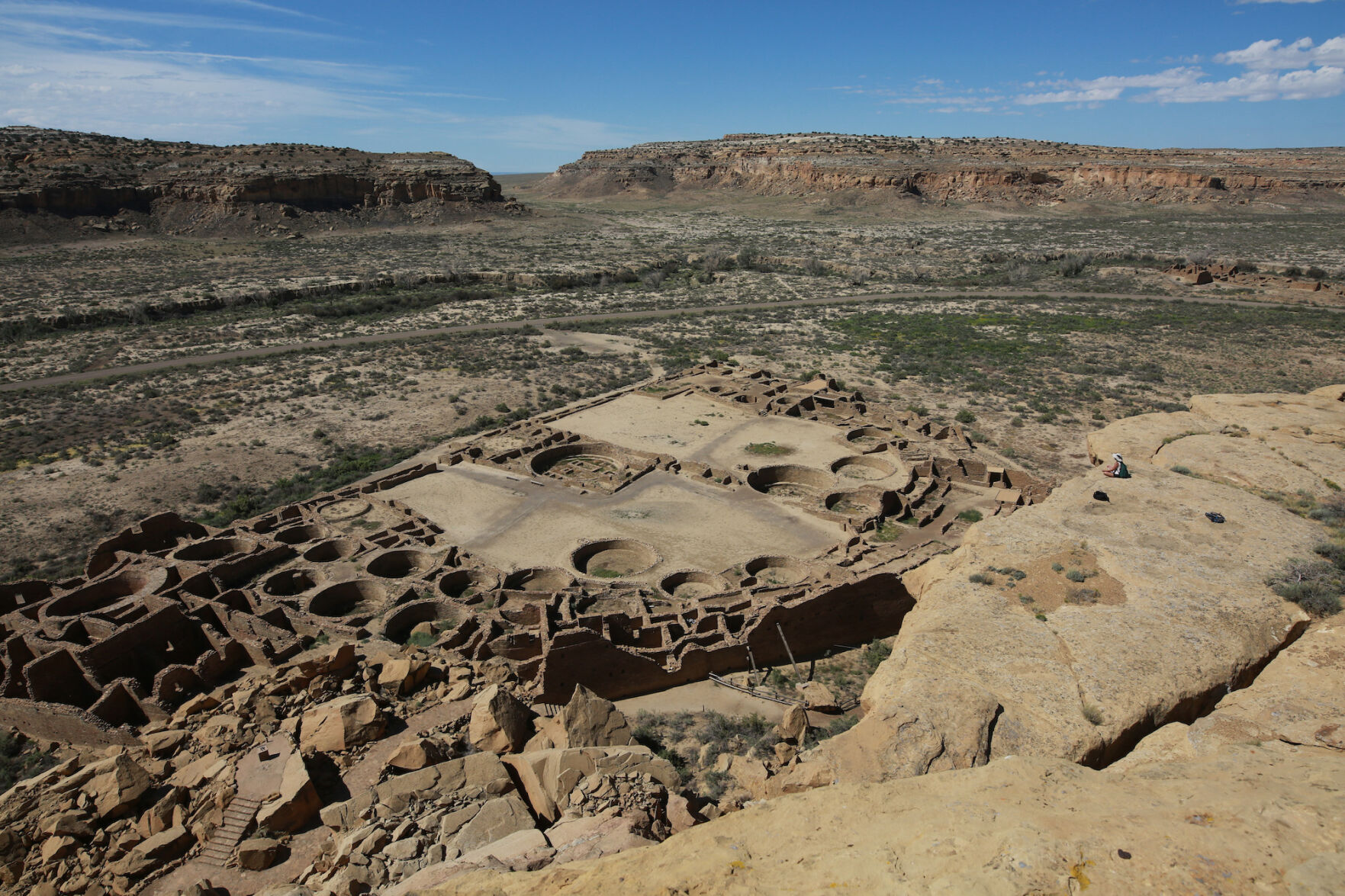
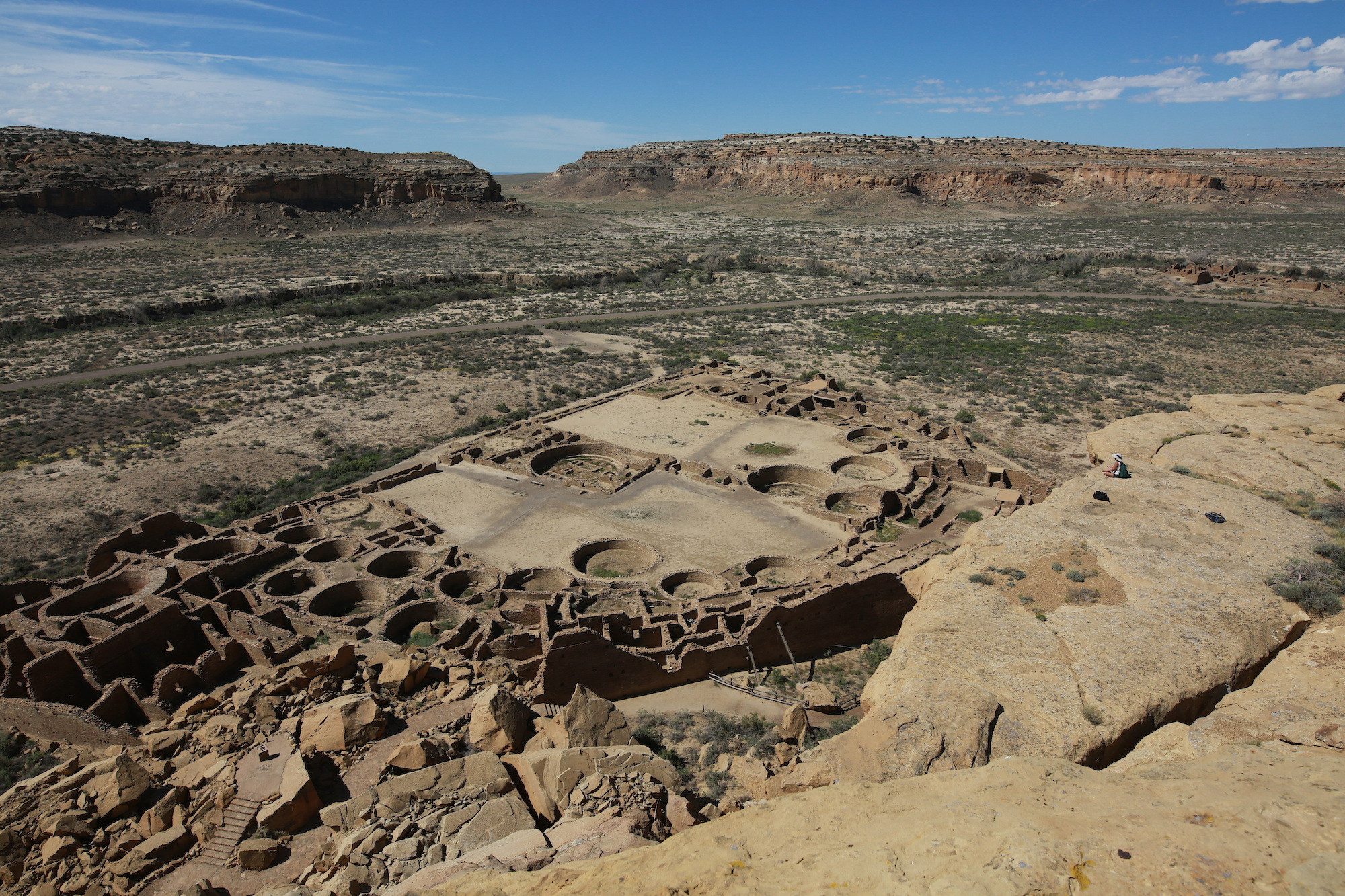
ALBUQUERQUE – Members of New Mexico’s congressional delegation are again pushing to make permanent a stop on oil and gas development outside the boundaries of Chaco Culture National Historical Park.
The Democrats reintroduced legislation on May 2 that would formalize a 10-mile buffer around the park that would span more than 490 square miles It’s the latest attempt to protect what environmentalists and Native American tribes consider the greater Chaco region, an expansive stretch of northwestern New Mexico that includes locations that are culturally significant to New Mexico pueblos and other tribes.
A moratorium on new leasing and mineral development on federal land remains in effect as the U.S. Interior Department considers a 20-year withdrawal that would prohibit drilling and other activities across
Pueblos in New Mexico have been working on an extensive ethnographic study of the region in hopes of better informing federal land managers of the cultural resources that dot the landscape. While the work is still under way, tribal leaders are hopeful that the federal government – particularly the Interior Department – is moving toward planning that incorporates traditional knowledge.
Mark Mitchell, chairman of the All Pueblo Council of Governors and former governor of Tesuque Pueblo, said the Chaco area represents an ancestral footprint and the foundation of core values that pueblo communities still strive to uphold today.
The Navajo Nation also completed its own study last year and has been advocating for a smaller area to be set aside given the economic impacts a withdrawal would have on the tribe and individual Navajo landowners whose allotments would be landlocked as a result.
US Sen. Martin Heinrich seeks 3rd term
SANTA FE – U.S. Sen. Martin Heinrich announced on May 3 that he will run for a third term next year as he champions causes from gun safety to abortion access to a transition toward cleaner energy in New Mexico, a major oil-producing state.
A win by the state’s senior senator would extend Democratic domination of New Mexico’s congressional delegation. Heinrich won a second term in 2018 in a three-way race against a Republican political newcomer and former Gov. Gary Johnson, who ran as a Libertarian.
Heinrich announced his candidacy in an online video that also highlighted federal spending on roads, bridges and wildfire relief.
Heinrich’s initial campaign pitch to voters touches on his advocacy for expanding early childhood education, as well as 2022 federal legislation toughening background checks for younger gun buyers and keeping firearms from more domestic violence offenders.
Heinrich is chairman of the Senate’s joint economic committee and sits on others overseeing intelligence services and policy on energy and natural resources.
Immediate endorsements came from influential state Democrats including newly elected Attorney General Raúl Torrez and House Speaker Javier Martínez of Albuquerque.
No candidates have emerged yet to challenge Heinrich.
MONTANA
Pollution lawsuit could curb use of aerial fire retardant
BILLINGS – A legal dispute in Montana could drastically curb the government’s use of aerial fire retardant to combat wildfires after environmentalists raised concerns about waterways that are being polluted with the potentially toxic red slurry that’s dropped from aircraft.
A coalition that includes Paradise, California – where a 2018 blaze killed 85 people and destroyed the town – said a court ruling against the U.S. Forest Service in the case could put lives, homes and forests at risk.
An advocacy group that’s suing the agency claims officials are flouting a federal clean water law by continuing to use retardant without taking adequate precautions to protect streams and rivers.
The group, Forest Service Employees for Environmental Ethics, requested an injunction blocking officials from using aerial retardant until they get a pollution permit.
The dispute comes as wildfires across North America have grown bigger and more destructive over the past two decades because climate change, people moving into fire-prone areas, and overgrown forests are creating more catastrophic megafires that are harder to fight.
Forest Service officials acknowledged in court filings that retardant has been dropped into waterways more then 200 times over the past decade. They said it happens usually by mistake and in less than 1% of the thousands of drops annually, and that environmental damage from fires can exceed the pollution from retardant.
Forest Service officials said they are trying to come into compliance with the law by getting a pollution permit but that could take years.
More than 100 million gallons of fire retardant were used during the past decade, according to the Department of Agriculture. It’s made up of water and other ingredients including fertilizers or salts that can be harmful to fish, frogs, crustaceans and other aquatic animals.
OKLAHOMA
Governor signs gender-affirming care ban for kids
OKLAHOMA CITY – Oklahoma on May 1 became the latest state to ban gender-affirming medical care for minors as Republican Gov. Kevin Stitt signed a bill that makes it a felony for health care workers to provide children with treatments that can include puberty-blocking drugs and hormones.
Oklahoma joins at least 15 other states with laws banning such care, as conservatives across the country have targeted transgender rights.
Stitt, who was reelected in November, made the ban a priority of this year’s legislative session, saying he wanted to protect children. Transgender advocates and parents of transgender children say such care is essential.
Stitt signed bills last year that prohibit transgender girls and women from playing on female sports teams and prevent transgender children from using school bathrooms that correspond to their gender identity.
The bill Stitt signed on May 1 makes it illegal to provide gender-transition medical care for anyone under the age of 18. Such treatment can include surgery as well as hormones and drugs that suppress or delay normal puberty.
Several civil liberty organizations, including the American Civil Liberties Union of Oklahoma, has promised to “take any necessary legal action” to prevent the law from taking effect.
“Gender-affirming care is a critical part of helping transgender adolescents succeed, establish healthy relationships with their friends and family, live authentically as themselves, and dream about their futures,” Lambda Legal, the ACLU and the ACLU said in a joint statement.
ARIZONA
Water permits for Saudi Arabia-owned farm revoked
PHOENIX – The state of Arizona has rescinded drilling permits for two water wells for a Saudi Arabia-owned alfalfa farm in the western portion of the state after authorities said they discovered inconsistencies in the company’s well applications.
Attorney General Kris Mayes said her office uncovered the inconsistencies in applications for new wells for the company Fondomonte Arizona LLC, which uses sprinklers to grow alfalfa in La Paz County and exports it to feed dairy cattle in Saudi Arabia. The company does not pay for the water it uses.
When Mayes brought the inconsistencies in the applications to the attention of state officials, they agreed to rescind the permits, which were approved in August.
AZFamily.com reported that the new wells would have pumped up to 3,000 gallons of water per minute. An average Phoenix family of four uses roughly 17,000 gallons of water per month, meaning the two new wells would have pumped in just three minutes what a family of four uses in a month.
Several large corporate farms in western and southeastern Arizona have come under criticism for using large amounts of water as the southwestern United States is experiencing a severe drought.
In some cases, neighbors have complained that the corporate farms have used so much water that neighboring wells have run dry. In addition, Arizona faces the possibility of losing substantial amounts of Colorado River water when the federal government announces new action to combat low water levels in Lake Powell and Lake Mead.

Colorado legislators propose $46.8 billion budget, driven by Medicaid costs
Marianne Goodland
marianne.goodland@coloradopolitics.com
Updated 2 hours ago
The six-member panel of legislators in charge of crafting the state budget has now turned over its plan to the Colorado legislature, proposing to spend $1.5 billion more for the Medicaid program. The increase is driven by Medicaid costs, which...

Governor signs bill expanding who can petition for weapons restrictions
Marissa Ventrelli
marissa.ventrelli@coloradopolitics.com
Updated 2 hours ago
Gov. Jared Polis on Monday signed a bill into law expanding who can ask a judge to temporarily restrict a person’s access to firearms. Established in 2019, 0Colorado’s extreme risk protection law (ERPO) initially allowed a family member or law...

Colorado justices restore RTD subcontractor’s award, reject ‘drastic’ view of public works law
Michael Karlik
michael.karlik@coloradopolitics.com
Updated 4 hours ago
The Colorado Supreme Court on Monday restored a $5.7 million award to a company that helped build a commuter rail line and, in doing so, rejected a view of state law that would nullify a subcontractor’s entitlement to any compensation...
As Colorado passes 6 million residents, housing initiatives take center stage
Marianne Goodland
marianne.goodland@coloradopolitics.com
Updated 3 hours ago
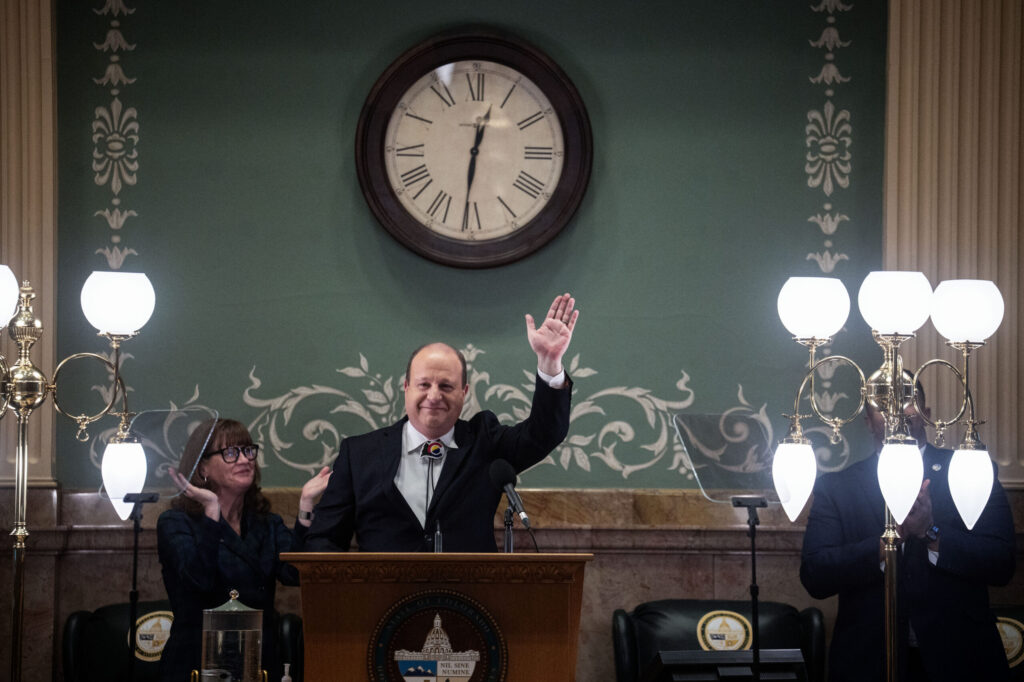
New Census data confirming Colorado’s population has topped six million is fueling renewed debate over Gov. Jared Polis’ housing agenda, as he tied the population increases to home construction. The governor said the counties experiencing the largest increases in new...

Congress urged to open antitrust investigation into Apple and OpenAI over ‘left-leaning bias’
Kaelan Deese, Washington Examiner
kaelan.deese.washington.examiner@gazetteedit.wpenginepowered.com
Updated 5 hours ago
A conservative legal group founded by senior White House adviser Stephen Miller is urging Congress to investigate a partnership between Apple and OpenAI, arguing the companies have effectively locked millions of people into a single, politically biased artificial intelligence system....

Trump threatens jail time over downed US fighter jet ‘leak’
Christian Datoc and Mabinty Quarshie, Washington Examiner
christian.datoc.and.mabinty.quarshie.washington.examiner@gazetteedit.wpenginepowered.com
Updated 5 hours ago
President Donald Trump threatened jail time Monday for the journalist who first reported that an airman was still missing after a fighter jet went down in Iran last week. The high-risk and eventually successful attempt to rescue the weapons officer...

Bill to accelerate police access to online data clears Colorado committee
Marissa Ventrelli
marissa.ventrelli@coloradopolitics.com
Updated 1 hour ago
A proposal to speed up law enforcement’s access to social media data is advancing in the Colorado Legislature, drawing testimony from the residents of Evergreen, where a school shooting took place, and questions from opponents worried about privacy and constitutional...

Colorado justices confirm lawyers may ‘borrow’ allegations from elsewhere
Michael Karlik
michael.karlik@coloradopolitics.com
Updated 7 hours ago
The Colorado Supreme Court ruled on Monday that plaintiffs’ lawyers can use allegations made elsewhere to bolster their own clients’ claims, so long as the attorney first performs some degree of investigation into the “borrowed” assertions. Under Colorado’s rules for...
El Paso County defendant’s speedy trial rights violated, Colorado justices find in overturning convictions
Michael Karlik
michael.karlik@coloradopolitics.com
Updated 7 hours ago
The Colorado Supreme Court concluded on Monday that an El Paso County prosecutor made an unjustified decision to file a mid-case appeal, pushing the trial beyond the legal deadline and requiring that the defendant’s convictions be overturned. In Colorado, the...

SCOTUS decides Colorado case, state’s newest justice authors first opinion | COURT CRAWL
Michael Karlik
michael.karlik@coloradopolitics.com
Updated 9 hours ago
Welcome to Court Crawl, Colorado Politics’ roundup of news from the third branch of government. The nation’s highest court decided a First Amendment case out of Colorado, plus the state’s newest justice issued her first opinion since joining the Colorado...
PREV
PREVIOUS
Dem state lawmaker attacks GOP majority over fiscal policy | A LOOK BACK
Sixty Years Ago This Week: Rep. Elmer Johnson, D-Denver, lamented to the Denver Democratic Forum that his Republican colleagues had created a “first-class” state financial mess. “I thought it would take two or three years to develop effective issues against the state administration,” Johnson said, “but they’ve done it for us in a single session.” […]

High potency marijuana associated with psychosis, curbs anxiety, depression: researchers
Is high potency marijuana bad for individuals with preexisting mental health conditions? According to university researchers, the answer is yes, depending on the condition. But the researchers found it also offers some benefits, such as reducing anxiety and depression. Researchers at the Colorado School of Public Health at the University of Colorado Anschutz Medical Campus pointed […]