

John Hickenlooper comes of age
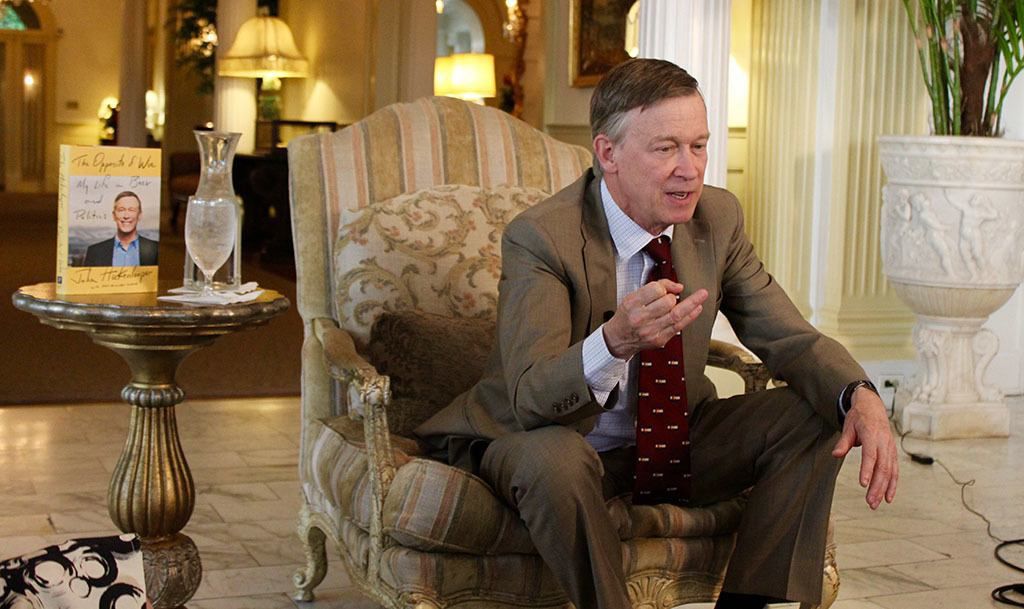
In his new autobiography, the bumbler, wanderer, pub owner, mayor and governor has delivered an only incidentally political ‘call to action for nerds’
John Hickenlooper’s autobiography is optimistic, sincere and uplifting. It is also only incidentally about politics, which seems to capture something essential about its subject.
Hickenlooper is the former Mayor of Denver and the current governor of Colorado and his name has been included on Democratic Party presidential candidate Hillary Clinton’s veepstakes shortlist. But Hickenlooper’s autobiography, “The Opposite of Woe: My Life in Beer and Politics” (Penguin), is less a political biography than it is a coming of age (very late) story.
The beer part is pivotal. Hickenlooper began his public life and made his fortune by taking a leap in 1988 and founding the Wynkoop Brewing Company. Wynkoop put him on the map in Denver and the story of his subsequent success seems to flow naturally from there. Politics comes into the story late and leaves early. The book ends in the wake of Hickenlooper’s reelection in 2014, which given the careening pace at which national politics has moved this election year, seems a long time ago.
The book is a “call to action for nerds,” Hickenlooper said. It’s a book for “kids who maybe don’t have the confidence – because that was my problem well into my thirties – I didn’t have the self-confidence to do anything. It was starting my own business that changed all that – when I was 36 years old. It’s a book for people tied up in a job that they don’t really like, but it’s secure, but the job doesn’t really suit them, so maybe (the book) will inspire them to make a change.”
Proust, Knausgard, Hickenlooper
Hickenlooper’s book came out last week and has been the talk of the town. He held a signing party at Wynkoop May 26 and hundreds of people attended. Business and political leaders and curious Denverites waited with freshly printed hardcovers tucked under their arms in a line that wound through pool tables in the upstairs rooms of the pub.
“I’m not inclined toward introspection. I’m not backward looking,” Hickenlooper says early in the book. He’s writing about a marriage counseling session but it’s the kind of thing autobiography readers could be forgiven for experiencing in the opening pages of the book with a sense of dread. The best autobiographical works delve deep. They betray an obsessive relationship with the past that can lead them down intricate remembrances of things past and into the darklands of confessional overexposure. Karl Ove Knausgard, the Norwegian author of a preposterously successful six-volume series of autobiographical novels, has said he feels he made a Faustian deal in which he sacrificed his relationships with friends and family to write the relentlessly revealing books that have made him famous.
No one could have been expecting that kind of thing generally from a sitting U.S. governor and nor in particular from Hickenlooper, a man who seems averse to intentionally offending anyone. But Hickenlooper included enough of the pain and awkwardness of the past to make the book come alive. There is much wrestling with the early death of his father, for example, the time he snapped a high-guy naked selfie and the day he haplessly took his Quaker mom to the 1970s classic X-rated movie “Deep Throat.”
“She sat through the whole thing,” he told reporters last week. “I didn’t recognize how lonely my mother was.” It’s that last part of the episode Hickenlooper said that makes him most uncomfortable to think about now.
Hickenlooper told The Statesman that his first wife Helen Thorpe, a journalist, kept detailed notes of their life together once he entered politics and that he leaned on the notes for the book. He also said he photocopied letters he sent to friends over the course of decades as a way to keep track of conversations. There’s at least a hint of something obsessive or posterity-minded about that.
But, true to form, Hickenlooper comes off in the book as determined not to be weighed down by complication and sadness. The rancher’s joke that gives the book its name is that the opposite of woe is “giddyup.”
Political brands and government budgets
Indeed, Hickenlooper’s light approach to his public life and work is part of the distinct Hickenlooper brand – in which he comes across as a fresh, above-the-partisan-fray, practical-minded problem-solver. “Well, I really haven’t read the bill yet,” is the way he often begins answering questions from the Capitol press corps. He then proceeds to talk theoretically about the bill in question, voicing opposing opinions as if he were just thinking aloud, sitting on a bar stool, swiveling back and forth among friends.
Max Potter, the Denver journalist and former Hickenlooper speechwriter who co-authored the autobiography, once described Hickenlooper’s aversion to neckties as part of “a strategy to perpetuate the image of him as the beer man who Forrest Gumped his way into politics, and specifically to avoid looking like a politician who now strategizes to look like the beer man who Forrest Gumped his way into politics.”
Potter at the Wynkoop signing event said the work he did on the book included making sure to retain Hickenlooper’s voice and tell Hickenlooper’s kind of story – which is a different kind of story than the kind policy wonks or political activists might like Hickenlooper to tell. Potter embedded with Hickenlooper for a year to write a 5280 magazine piece on the governor’s first term. He said the good news is that the Hickenlooper brand turns out to be close in an essential way to Hickenlooper the person.
“That 5280 piece was me kicking the tires, you know, and I liked what I saw. So, OK, I’m in,” Potter said. “I think Hickenlooper is real and that being real is his greatest strength.”
Two-thirds into the autobiography, Hickenlooper writes about his 2003 decision to jump into politics. “I believed I would be a good mayor, that I would have fun, and that I could make a difference,” he says. It’s the decision that will have lured many readers at least initially to buy the book, but it comes off almost as an aside. The sentence is as light as a feather. Out of someone else’s mouth, it would sound like bromide. But it’s pure Hickenlooper because it’s probably 100 percent true.
In the speech in which he announced his candidacy for mayor, Hickenlooper talked about how he started his brew pub and helped build the businesses around it, remaking the LoDo neighborhood in Denver in the process. “Economic development is not a catchphrase I picked up on the campaign trail – It’s what I do,” he said.
Hickenlooper has presented himself all along as a political figure who seems to genuinely regard the politics of governing as the least interesting thing about it. Reporters at times find it exasperating. Voters find it refreshing. In the book he explains that business development has been his top priority as an elected official, as has demonstrating to constituents that it’s possible to govern the way he ran his business – as a consensus builder. “There’s no margin in making enemies,” he always says.
As governor, Hickenlooper has prioritized passing state budgets with broad bipartisan support. The bipartisan budgets are a starting point for everything else and they are Hickenlooper’s own measure of success. He may be on to something.
On Capitol Hill, lawmakers now largely engage the budget merely as an opportunity to campaign for reelection, which has infuriated constituents and, as much as anything else, resulted in historically low public opinion of the do-nothing Congress. In Kansas, Gov. Sam Brownback and the Republican legislative majority have subjected residents to a radical supply-side budget program over the course of years that has turned governing there into a long, lopsided war. In Illinois, Republican Gov. Bruce Rauner and the Democratic majority have deadlocked on that state’s budget for months, shutting down government services. This week as the spring legislative session lurched toward its conclusion, Rauner called his state a “banana republic.”
Colorado is a feisty swing state where political battles run hot every year, but the government still works by most any measure. It’s not gridlocked. It’s not hobbled by ambition and ideology.
Ghosts of his father
Hickenlooper consistently deflects talk of a spot on the Clinton presidential ticket or a position in the Clinton cabinet. The timing of the book release was set by the publisher, he said. “I’ve been thinking about doing it for about ten years and I had the chance with Max, who I know and trust, to do it now,” he said.
Hickenlooper said he was inspired to provide a written record of the crucial turns in his life for his son, Teddy.
“I didn’t have that when my father died. I was quite young (seven years old). I grew up in a pretty quiet house, you know, people just didn’t talk a lot about my dad, and yet he was the life of the party. My dad was a funny guy. He told stories. He and three friends canoed from Cincinnati down the Ohio River to the Mississippi and to Memphis one summer after senior year in high school. He did all these wonderful things. I never knew about it. I never knew that he knew Kurt Vonnegut in college. I didn’t know that until I was 45 years old and Vonnegut came out here for an art show … So, I wanted all my stories collected somewhere for Teddy.”
“The ghost that motivated him in his writing I think was his dad,” said Potter. “But of course, he was thinking about his son, too. And what we found is that it was basically the same thing.”


Suddenly, Colorado has a private school choice program │ Vince Bzdek
Vince Bzdek
vince.bzdek@gazette.com
Updated 2 hours ago
By Vince Bzdek When I was a kid going to St. John’s Catholic grade school in Denver, I remember asking my mom if she and dad minded paying taxes for public schools since all her kids attended Catholic ones. We...
Tyson’s beef plant closure in Nebraska to impact town, ranchers nationwide | OUT WEST ROUNDUP
Ernest Luning
ernest.luning@coloradopolitics.com
Updated 4 days ago
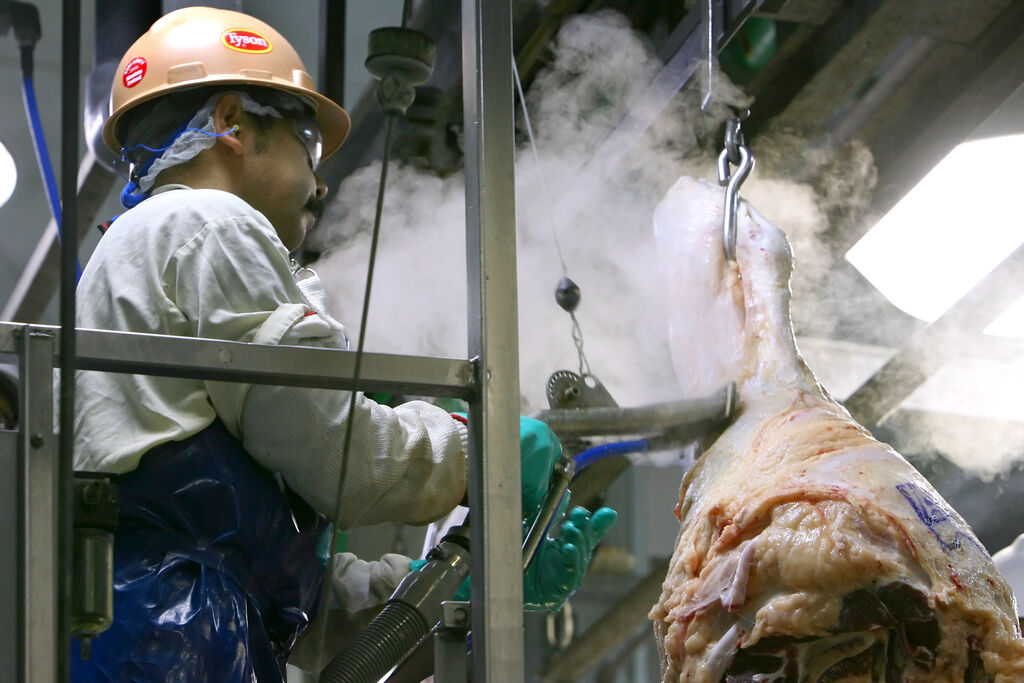
NEBRASKA Beef plant’s closure could ripple OMAHA — Tyson Foods’ decision to close a beef plant that employs nearly one third of residents of Lexington, Nebraska, could devastate the small city and undermine the profits of ranchers nationwide. Closing a...
Calendar Dec. 15-21
Rachael Wright
rachael.wright@coloradopolitics.com
Updated 4 days ago
CoPo’s weekly political calendar will help you find political and public-policy events throughout Colorado. It includes candidate and issue campaign events, public policy meetings, court hearings, state and local party conventions, assemblies, debates, rallies, parades, speaking engagements, traveling dignitary appearances,...
Denver Mayor Peña makes unexpected announcement | A LOOK BACK
Rachael Wright
rachael.wright@coloradopolitics.com
Updated 4 days ago
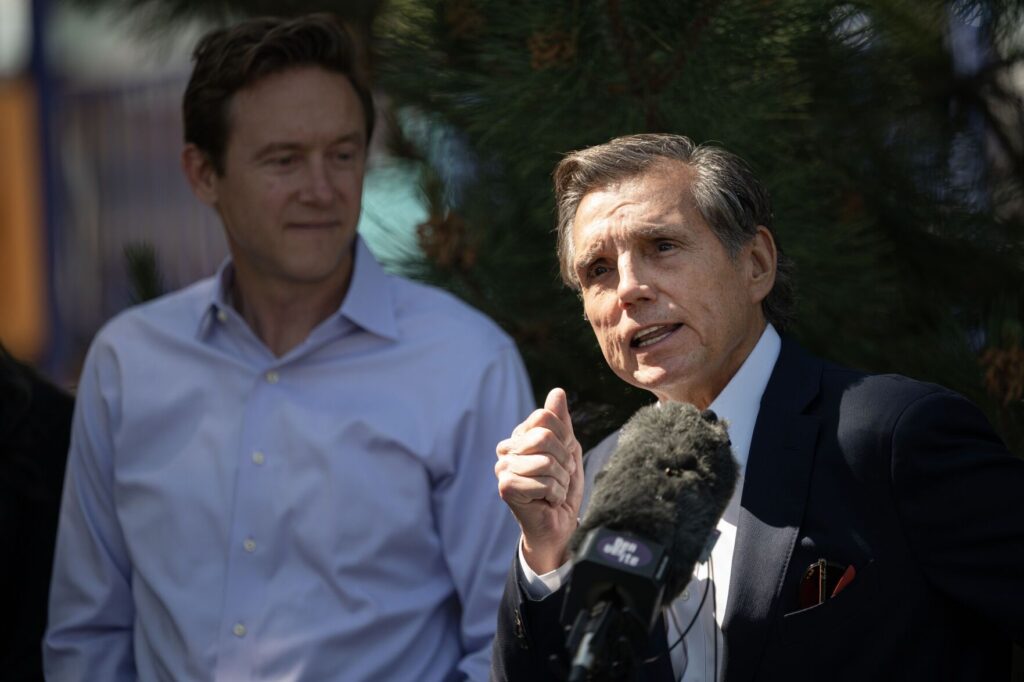
Thirty-Five Years Ago This Week: Denver Mayor Federico Peña announced personal news that caught many of his supporters and Denver residents who paid close attention to politics off guard. Just two weeks prior on Nov. 16, 1990, The Colorado Statesman...

Julie Gonzales’s long but not impossible odds | SONDERMANN
Eric Sondermann
eric-sondermann@coloradopolitics.com
Updated 4 days ago
Allow me to start with a flashback. It was Thanksgiving 2024, just over 12 months back. For the first time, our son Clarke hosted the family Thanksgiving near New York City. It is a sign of our aging when the...

Performers announced for 14th Klezfest | NONPROFIT REGISTER
Thelma Grimes
thelma.grimes@coloradopolitics.com
Updated 2 days ago
MIZEL MUSEUM JCC DENVER Denver News: Klezfest 2025, which takes place Dec. 20, will feature performances by a host of popular Jewish entertainers: Rabbi Joe Black and Steve Brodsky; Hal Aqua & The Lost Tribe; Mishmish and Gora Gora Orkestar. Rabbi Black is a pioneer of contemporary Jewish music and has...

Colorado commission makes new access-to-justice recommendations after renewed listening tour
Michael Karlik
michael.karlik@coloradopolitics.com
Updated 1 day ago
Adding judges to handle caseloads. Expanding authority for paraprofessionals in civil cases. Allowing self-represented litigants to file electronically. Making the judiciary’s website user-friendly. Those were among the recommendations advanced by the Colorado Access to Justice Commission in a report released Friday,...
Trump targets Colorado AI law with executive order, setting stage for legal fight
Marianne Goodland
marianne.goodland@coloradopolitics.com
Updated 2 days ago
Colorado’s 2024 effort to regulate artificial intelligence is facing a direct challenge from the Trump administration. President Donald Trump signed an executive order on Thursday to block states from enforcing their own AI laws. Trump also announced the creation of...

Colorado residents face high energy bills after regulators turn away from natural gas, experts say
Mark Samuelson Special to The Denver Gazette
mark.samuelson@denvergazette.com
Updated 2 days ago
Colorado residents could be paying a lot more for home energy, following the state’s decision last week to turn away from natural gas as a home cooking and heating fuel, experts said. Some 1.9 million Colorado households warm their homes...
Colorado’s government spending has outpaced inflation, analysis finds
Marissa Ventrelli
marissa.ventrelli@coloradopolitics.com
Updated 2 days ago
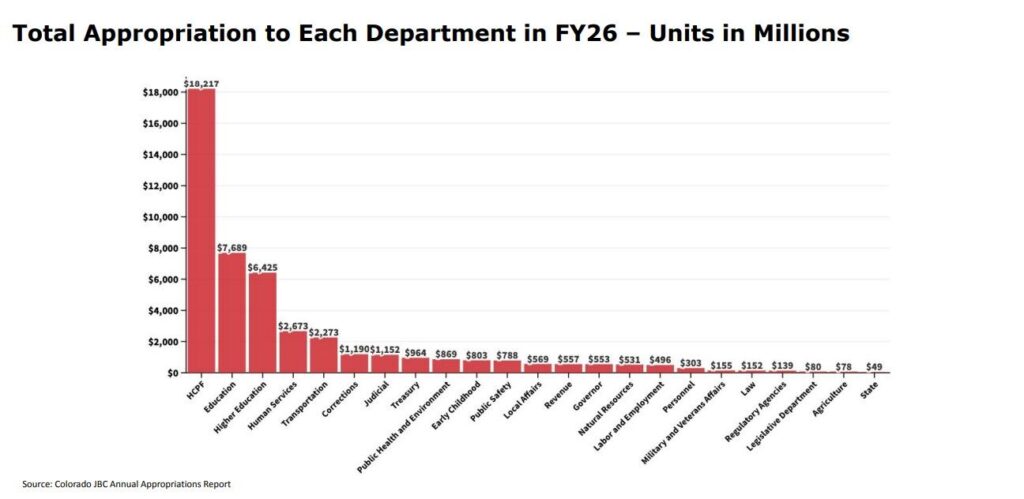
Colorado’s per-person spending has increased by 31% over the last two decades despite slowed population growth, according to a new analysis by the Common Sense Institute. The annual report compares state spending by department over the last 20 years, tracking...
PREV
PREVIOUS
Former brewer Hickenlooper weighs grocery store beer, wine sales
A co-founder of Colorado’s first brewpub, Gov. John Hickenlooper has a tough call to make in this year’s politically-charged alcohol debate. He must decide whether or not to give his executive approval to a bi-partisan bill passed by the legislature that proponents say would protect mom-and-pop liquor stores from having their businesses overrun by out-of-state grocery corporations. […]

PHOTOS: Obama touches down in Colorado for last Air Force commencement address
President Barack Obama touched down in Colorado to give his final commencement speech to U.S. Air Force Academy graduates as commander in chief. The graduates are coming of age at a time of fresh global threats that seem to be pulling the United States back into conflicts with uncertain ends. When he came into office […]