

State Supreme Court gives narrow legal guidance on ex-Denver deputy sheriff’s termination

The Colorado Supreme Court advised on narrow legal grounds that a former Denver deputy sheriff was not entitled to a federal civil liability claim separate from his original state lawsuit contesting his termination.
The Denver Sheriff Department fired Franklin Gale in January 2015. At the time, Gale was a deputy sheriff and head of the Downtown Detention Center. The department alleged that Gale had violated its regulations and career service rules, including an act of dishonesty. Gale countered that the dismissal was retaliation for his union activities.
Denver’s Career Service Board, which oversees the Office of Human Resources, upheld the termination. After Gale sued in both state and federal court alleging violations of his constitutional rights to free speech and free association, those cases were ultimately dismissed or decided in the board’s favor.
The Colorado Supreme Court weighed in solely on the grounds of deciding claim preclusion, or whether parties are allowed to litigate or relitigate claims that should have been decided in earlier proceedings. The U.S. Court of Appeals for the 10th Circuit asked the high court for its opinion after Gale filed a civil liability claim federally based on an alleged deprivation of rights that was separate from his state court lawsuit.
In writing for the court, Justice Richard L. Gabriel noted that the claim preclusion question “requires a court to determine whether the claim at issue in a second proceeding is the same claim that was or that could have been brought in the first proceeding.”
Gabriel pointed out that the two cases Gale relied on, which seemed to provide justification for his separate federal liability claim, were decided on principles other than claim preclusion, including one plaintiff’s inability to assert the liability claim in earlier proceedings.
Therefore, the Supreme Court had not created an exception to the claim preclusion doctrine that would have allowed Gale’s federal liability claim separately from the original state lawsuit.
“We thus answer ‘no’ to the certified question before us,” Gabriel wrote.
The case is Franklin Gale v. City & County of Denver.



Appeals court orders new trial after Denver judge wrongly let defendant represent self
Michael Karlik
michael.karlik@coloradopolitics.com
Updated 7 hours ago
A Denver judge incorrectly found that a defendant understood what he was doing by giving up his constitutional right to counsel, Colorado’s second-highest court concluded on Thursday in overturning the man’s assault convictions. Criminal defendants are allowed to represent themselves...

Gov. Jared Polis’ plan to privatize Pinnacol Assurance comes with legal questions
Marianne Goodland
marianne.goodland@coloradopolitics.com
Updated 7 hours ago
Gov. Jared Polis recently announced that, as part of his proposed 2026-27 budget, he would allow Pinnacol Assurance, Colorado’s quasi-public workers’ compensation insurance division, to go private. However, questions on whether it’s possible or legal remain. The Polis administration previously...
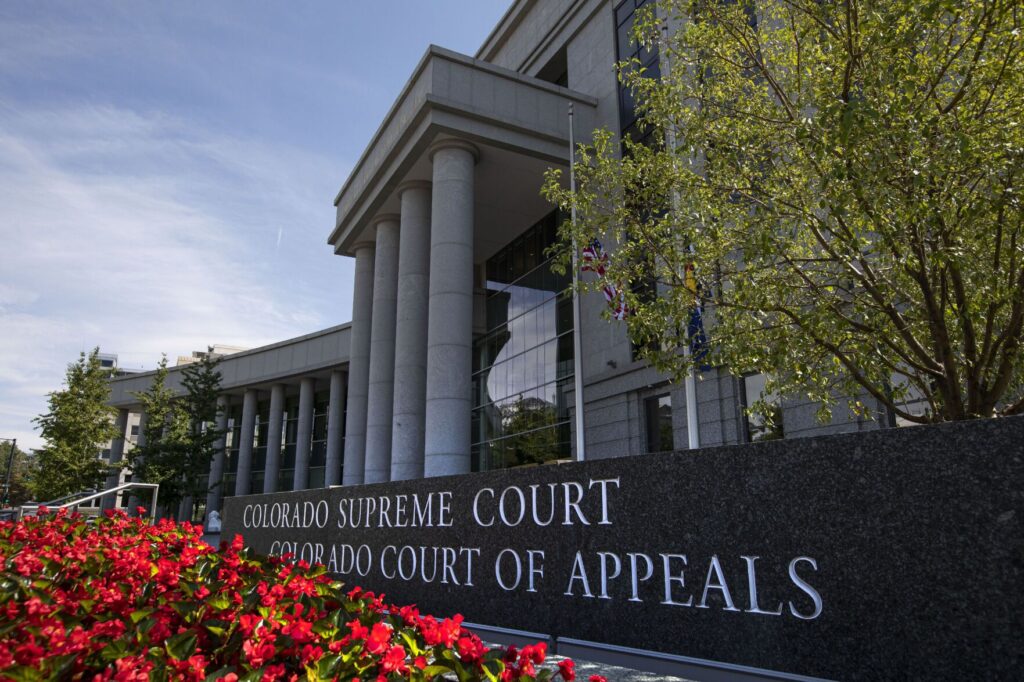
Appeals court reverses murder conviction after Denver judge violated public trial right
Michael Karlik
michael.karlik@coloradopolitics.com
Updated 8 hours ago
Colorado’s second-highest court reversed a defendant’s murder conviction on Thursday because a Denver judge violated his constitutional right to a public trial. Due to an unusually large jury pool at Edward R. Sandoval’s 2022 trial, Chief Judge Christopher J. Baumann...
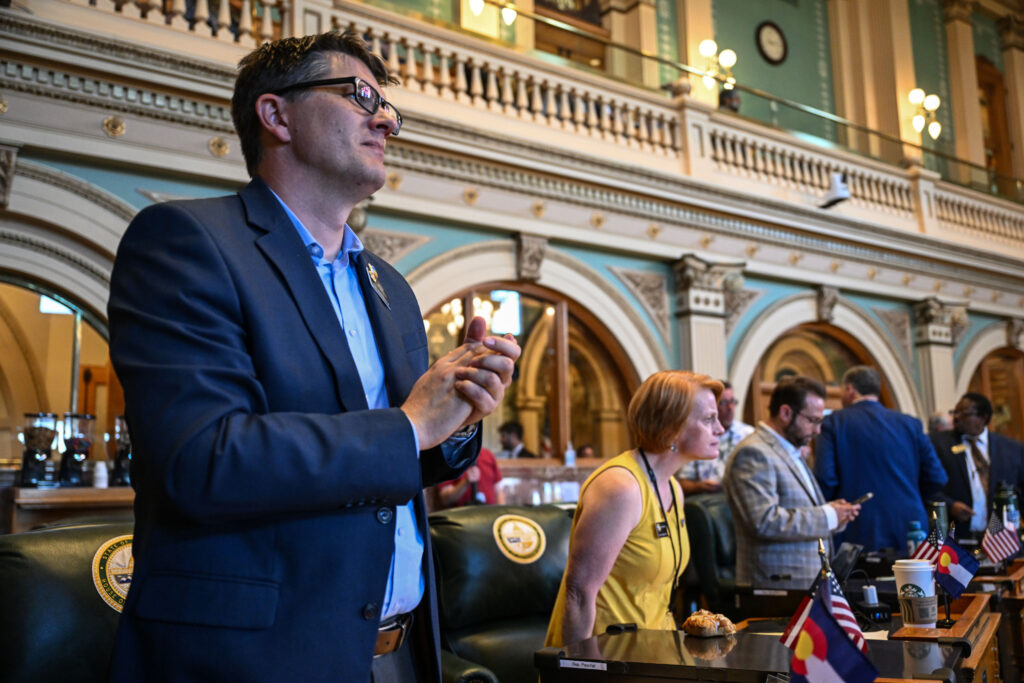
Rep. Kyle Brown to replace Shannon Bird on Colorado’s Joint Budget Committee
Marissa Ventrelli
marissa.ventrelli@coloradopolitics.com
Updated 8 hours ago
Colorado House Speaker Julie McCluskie appointed Rep. Kyle Brown to the legislature’s Joint Budget Committee. Brown, a Louisville Democrat, was chosen to replace Rep. Shannon Bird, D-Westminster, who announced on Friday that she would be stepping down from the committee...

Colorado joins lawsuit against U.S. Dept. of Education over student loan forgiveness
Marissa Ventrelli
marissa.ventrelli@coloradopolitics.com
Updated 8 hours ago
Colorado has joined 21 states in a lawsuit against the U.S. Department of Education over placing restrictions on a student loan forgiveness program for public service employees. It’s the latest lawsuit filed by Attorney General Phil Weiser, who is running...
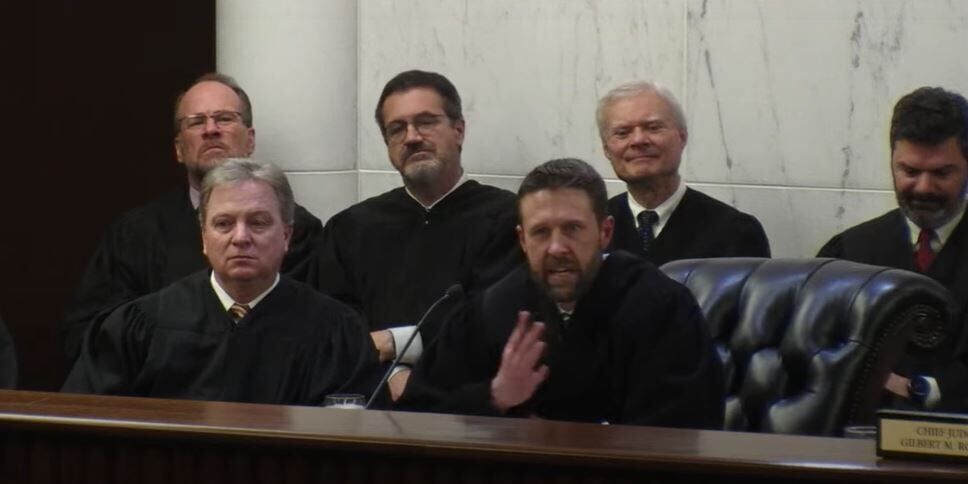
Appeals judge asks Colorado Supreme Court to clarify process for returning seized property to defendants
Michael Karlik
michael.karlik@coloradopolitics.com
Updated 8 hours ago
A member of Colorado’s second-highest court asked the state Supreme Court on Thursday to address the consequences of its 2022 decision outlining how convicted defendants are supposed to seek the return of property seized by law enforcement. In Woo v....

Judges speak about public trust and criticism, ICE’s warrantless arrests under scrutiny | COURT CRAWL
Michael Karlik
michael.karlik@coloradopolitics.com
Updated 13 hours ago
Welcome to Court Crawl, Colorado Politics’ roundup of news from the third branch of government. A handful of federal and state judges spoke last week about trust and communications challenges with the public, plus a federal judge seemed to believe...

Trump administration says SNAP will be partially funded in November
Geoff Mulvihill
geoff.mulvihill@associatedpress.com
Updated 13 hours ago
PROVIDENCE, R.I. (AP) — President Donald Trump’s administration said Monday that it will partially fund SNAP after two judges issued rulings requiring it to keep the nation’s largest food aid program running. The U.S. Department of Agriculture, which oversees the...
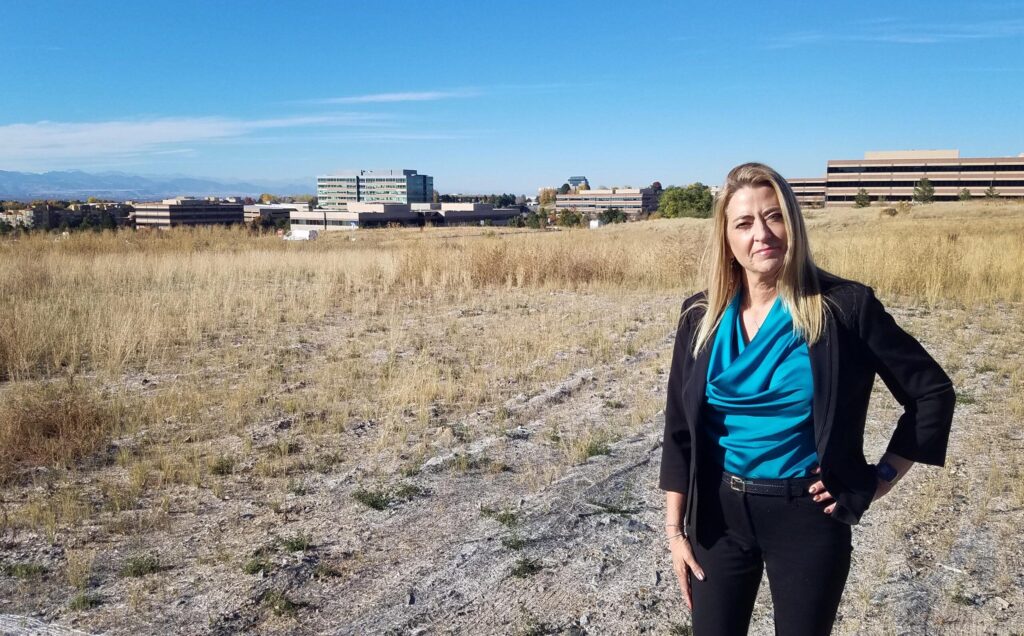
Builders say state’s push fails to create more affordable housing
Mark Samuelson Special to The Denver Gazette
mark.samuelson@denvergazette.com
Updated 11 hours ago
What’s the secret sauce for making homes more affordable in Colorado? That’s the question that renters are asking when the median price of a home — now $550,000 — ranks Colorado as one of the least affordable places to live...
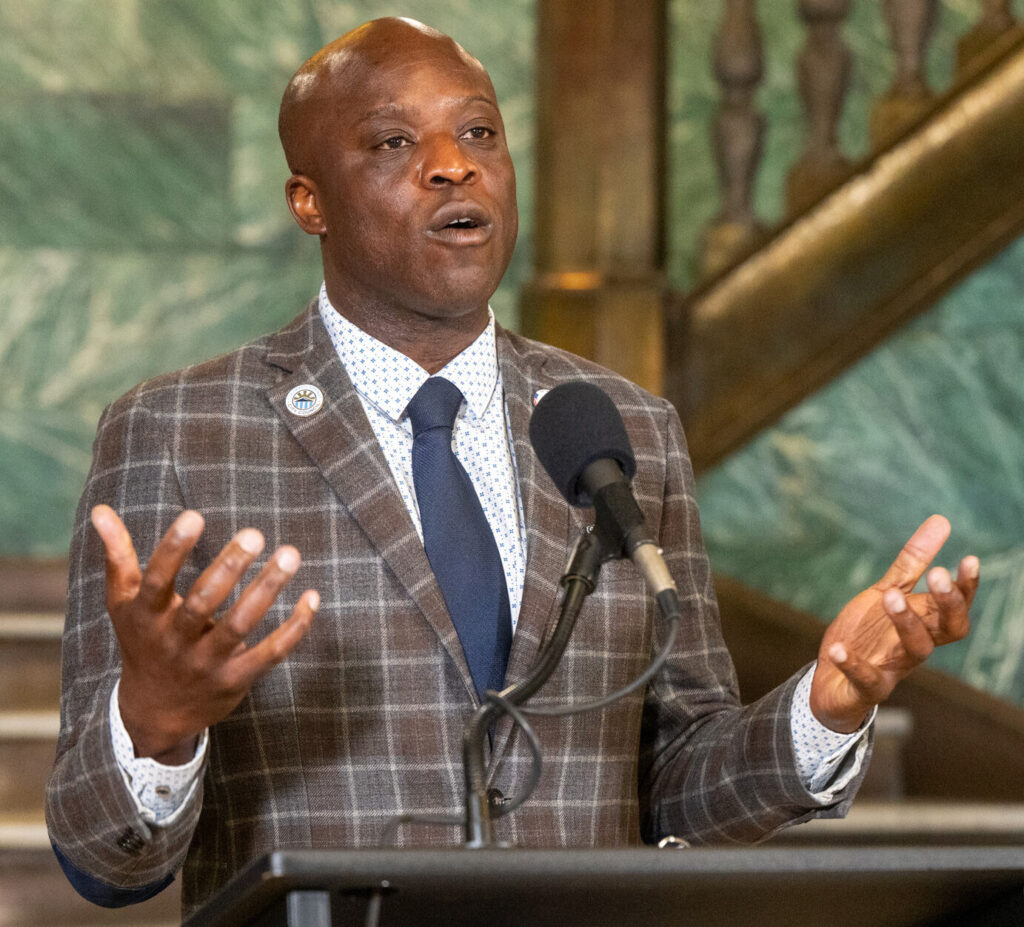
Colorado Springs mayor asks community to support food banks amid freeze on SNAP funding
Nick Smith
nick-smith@coloradopolitics.com
Updated 12 hours ago
Colorado Springs Mayor Yemi Mobolade is calling on the community to help support local food assistance programs amid a funding freeze on the federal Supplemental Nutrition Assistance Program. “I am calling on our entire community — residents, nonprofits, faith leaders,...
PREV
PREVIOUS
Fed cuts interest rate target by half a percentage point in response to coronavirus fears
The Federal Reserve issued an emergency reduction in its interest rate target of half a percentage point in response to the coronavirus outbreak. “The coronavirus poses evolving risks to economic activity,” the central bank said in a statement Tuesday. The Fed also said that the “fundamentals of the U.S. economy remain strong” despite the current economic situation. […]

Denver's airport ramps up cleaning guidelines amid coronavirus concerns
Denver International Airport is enhancing its efforts to keep passengers and employees healthy amid a growing outbreak of COVID-19, the technical name for the novel coronavirus. Despite having no confirmed cases of the virus in Colorado, and the fact that DIA is not one of the 20 airports being screened by the U.S. Centers for […]