

Denver school resource officers program meets with concern from councilmembers
As school shootings and teen suicides continue to rise, prioritizing conversations around school violence and safety is at the forefront of many minds – including that of Denver decision-makers, who met Wednesday to evaluate ongoing efforts to protect local students.
Denver Public Schools and the Denver Police Department have been working together contractually since 2004 to help keep schools safe. Representatives from both organizations gave a joint report on the school resource officers (SRO) program, now effective on 18 campuses around the region, during a Safety, Housing, Education and Homelessness Committee meeting.
The goal of the SRO program is not only to prevent “more criminalization of kids” and an “increase in the school-to-prison pipeline,” DPS Department of Safety Chief Michael Eaton said, but also “engage students in a positive way in their school communities” and soften the hardened perception some students have of cops.
The current contract allocates more than $720,000 for 18 SROs, who are placed in 14 high schools and four middle schools in the metro area.
Officers in the program are chosen if they are in good standing, have a history of working with kids and have successfully interviewed with both DPS and the police department, according to Ron Thomas, chief for Denver Police Department’s Patrol Division.
“The reason why we go through that process is, really, to develop some buy-in both on behalf of the department and the school,” Thomas said.
SROs, once hired, also are required to complete an eight-hour training course that goes over implicit bias, cultural awareness, adolescent brain development, trauma-informed practices, mental health first-aid, and protocol for the Safe2Tell service, an anonymous tip line for reporting potential threats and mental health incidents.
Another requirement for school resource officers is annually attending a 40-hour training conference and completing a module focused on “bridging the gap” between kids and cops.
DPS and DPD pointed to a decrease in arrests, something they said was due to the SRO program, at least in part.
Another point of pride was a revision to the SRO program’s handcuffing policy, effective as of September, which now bans anyone 12-years-old or younger from being handcuffed or restrained by another device.
Forty-five percent of students handcuffed in the last two years by the DPS Department of Safety were African American – a “huge disproportionality,” Eaton said, considering they only represent 14% of students.
Eaton said he was proud of the work being done but also acknowledged there was still “a lot of work to do.” And some councilmembers on the committee agreed with that, expressing some concerns.
Councilwoman Robin Kneich asked about how SROs handle suicide threats and found it “very surprising” that mental health professionals were not being deployed with officers when addressing a student in distress.
Eaton said that most of these calls come after school hours, when personnel is not working, and said they were working with the resources they had.
Kneich said she worried that “the uniform carries a message” and can often escalate a sensitive situation involving a vulnerable person. She suggested “de-emphasizing a uniformed approach,” a tactic Eaton said they should look at carefully so as not to backtrack on developing a positive relationship between kids and cops in uniform.
Councilwoman Jamie Torres expressed concern that the long-term approach of the SRO program was indefinite, with no way to build itself out of, or graduate from, a school after goals are met.
Eaton said the goal is to stay – to build relationships and systemically “create a culture that supports a positive role model” over a long period of time.
Councilwoman Candi CdeBaca suggested the need for a “formal tool” to evaluate student feedback and ensure there is data-driven justification to place, or not to place, SROs in schools.
Without hard data, CdeBaca said, “we’re not doing a service to our students.”
The SRO program is reflective of a shift in Colorado’s violence-prevention approach, wherein individual districts are tasked with developing their own safety procedures, a strategy the state auditor has criticized for creating a patchwork of policies.
State Rep. Dafna Michaelson Jenet, a Democrat who chairs the school safety committee created after the STEM School Highlands Ranch shooting in May, is considering legislation that would mandate the state’s school districts to meet official standards around response to violent threats.


Suddenly, Colorado has a private school choice program │ Vince Bzdek
Vince Bzdek
vince.bzdek@gazette.com
Updated 5 hours ago
By Vince Bzdek When I was a kid going to St. John’s Catholic grade school in Denver, I remember asking my mom if she and dad minded paying taxes for public schools since all her kids attended Catholic ones. We...
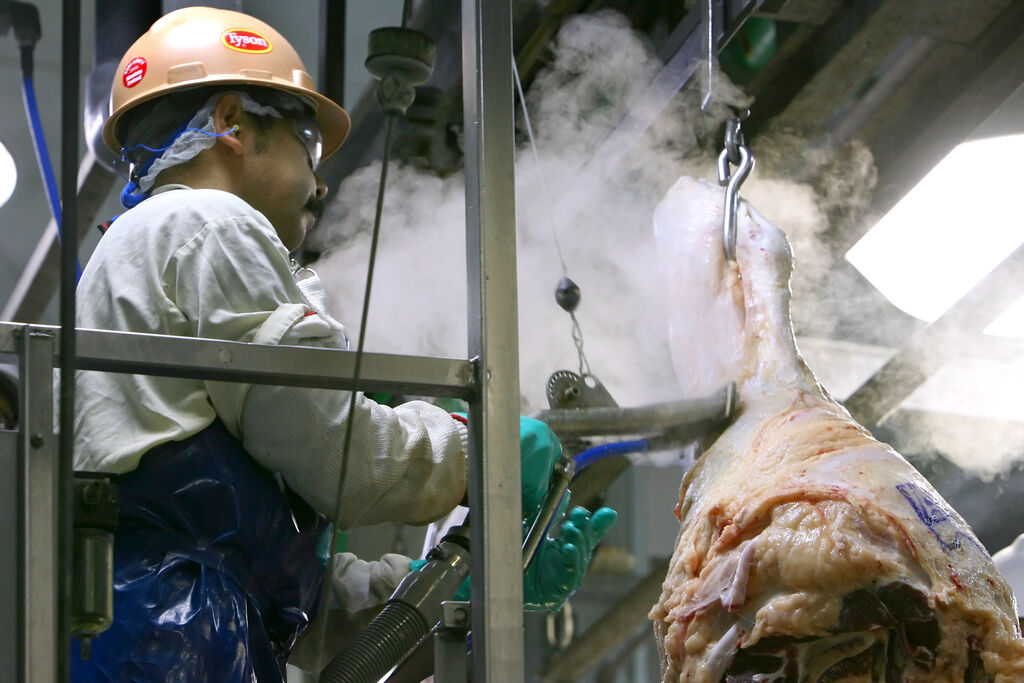
Tyson’s beef plant closure in Nebraska to impact town, ranchers nationwide | OUT WEST ROUNDUP
Ernest Luning
ernest.luning@coloradopolitics.com
Updated 4 days ago
NEBRASKA Beef plant’s closure could ripple OMAHA — Tyson Foods’ decision to close a beef plant that employs nearly one third of residents of Lexington, Nebraska, could devastate the small city and undermine the profits of ranchers nationwide. Closing a...

Calendar Dec. 15-21
Rachael Wright
rachael.wright@coloradopolitics.com
Updated 4 days ago
CoPo’s weekly political calendar will help you find political and public-policy events throughout Colorado. It includes candidate and issue campaign events, public policy meetings, court hearings, state and local party conventions, assemblies, debates, rallies, parades, speaking engagements, traveling dignitary appearances,...
Denver Mayor Peña makes unexpected announcement | A LOOK BACK
Rachael Wright
rachael.wright@coloradopolitics.com
Updated 4 days ago
Thirty-Five Years Ago This Week: Denver Mayor Federico Peña announced personal news that caught many of his supporters and Denver residents who paid close attention to politics off guard. Just two weeks prior on Nov. 16, 1990, The Colorado Statesman...

Julie Gonzales’s long but not impossible odds | SONDERMANN
Eric Sondermann
eric-sondermann@coloradopolitics.com
Updated 4 days ago
Allow me to start with a flashback. It was Thanksgiving 2024, just over 12 months back. For the first time, our son Clarke hosted the family Thanksgiving near New York City. It is a sign of our aging when the...

Performers announced for 14th Klezfest | NONPROFIT REGISTER
Thelma Grimes
thelma.grimes@coloradopolitics.com
Updated 2 days ago
MIZEL MUSEUM JCC DENVER Denver News: Klezfest 2025, which takes place Dec. 20, will feature performances by a host of popular Jewish entertainers: Rabbi Joe Black and Steve Brodsky; Hal Aqua & The Lost Tribe; Mishmish and Gora Gora Orkestar. Rabbi Black is a pioneer of contemporary Jewish music and has...

Colorado commission makes new access-to-justice recommendations after renewed listening tour
Michael Karlik
michael.karlik@coloradopolitics.com
Updated 1 day ago
Adding judges to handle caseloads. Expanding authority for paraprofessionals in civil cases. Allowing self-represented litigants to file electronically. Making the judiciary’s website user-friendly. Those were among the recommendations advanced by the Colorado Access to Justice Commission in a report released Friday,...

Trump targets Colorado AI law with executive order, setting stage for legal fight
Marianne Goodland
marianne.goodland@coloradopolitics.com
Updated 2 days ago
Colorado’s 2024 effort to regulate artificial intelligence is facing a direct challenge from the Trump administration. President Donald Trump signed an executive order on Thursday to block states from enforcing their own AI laws. Trump also announced the creation of...

Colorado residents face high energy bills after regulators turn away from natural gas, experts say
Mark Samuelson Special to The Denver Gazette
mark.samuelson@denvergazette.com
Updated 2 days ago
Colorado residents could be paying a lot more for home energy, following the state’s decision last week to turn away from natural gas as a home cooking and heating fuel, experts said. Some 1.9 million Colorado households warm their homes...
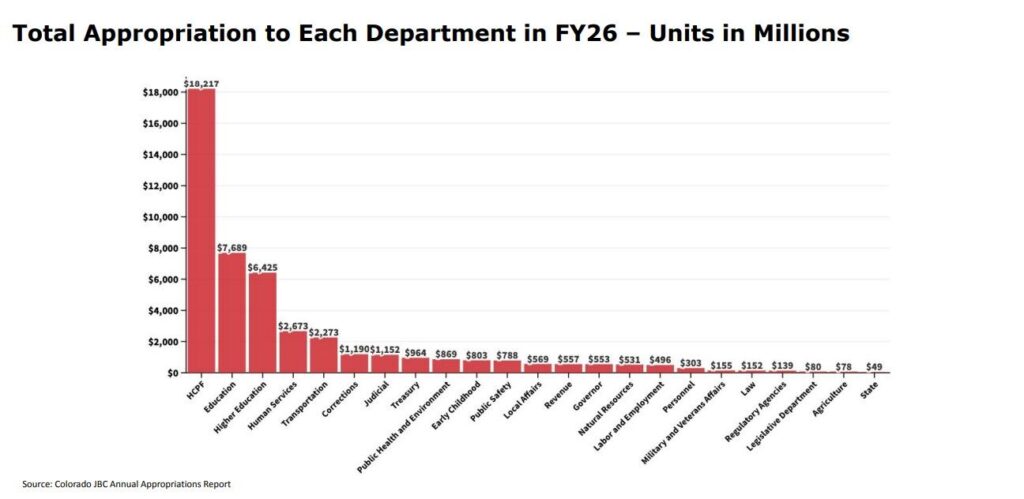
Colorado’s government spending has outpaced inflation, analysis finds
Marissa Ventrelli
marissa.ventrelli@coloradopolitics.com
Updated 2 days ago
Colorado’s per-person spending has increased by 31% over the last two decades despite slowed population growth, according to a new analysis by the Common Sense Institute. The annual report compares state spending by department over the last 20 years, tracking...
PREV
PREVIOUS

2020 Colorado Senate race: Hickenlooper trumps other Democrats on fundraising
When it comes to fundraising in Colorado’s crowded Democratic U.S. Senate primary, it’s John Hickenlooper up here and everyone else down there. The popular former two-term governor raised about three times as much as the other seven active primary candidates combined for the quarter that ended Sept. 30, though the two Democrats with legislative wins […]

All Colorado US House members vote against Trump on Turkey's intrusion into Syria
In a rare show of unity, all seven members of Colorado’s U.S. House congressional delegation voted in favor of a resolution that opposes President Trump’s decision to end the country’s efforts that previously prevented Turkish military operations against Kurdish forces in northern Syria. The resolution, H.J. Res. 77, passed with 354 “yes” votes, including 129 […]