

Colorado Supreme Court reins in Arapahoe County judge who set early deadline for DUI test results
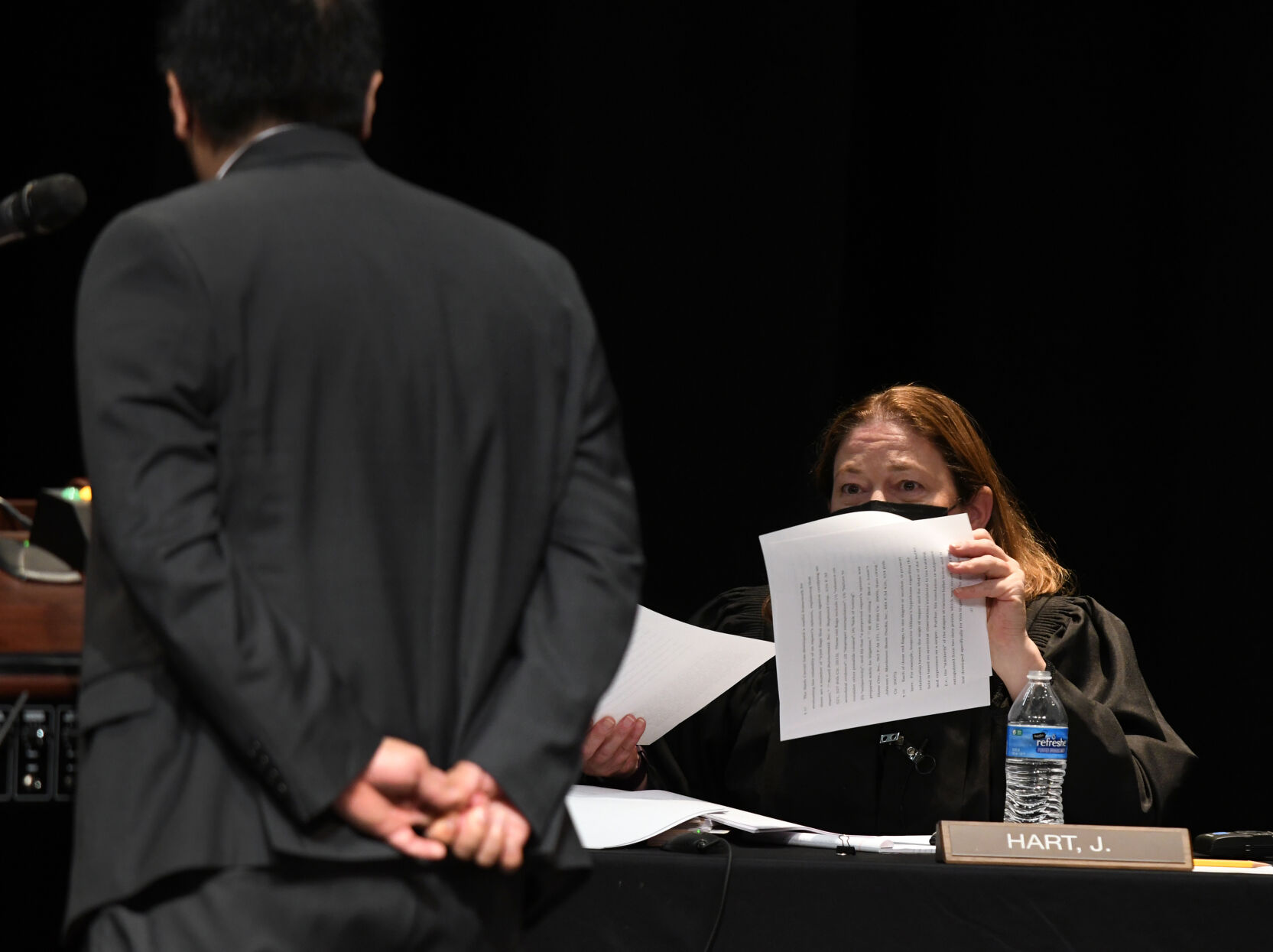
An Arapahoe County judge had no authority to penalize the prosecution when the state lab did not provide blood test results in a drunk driving case as soon as he wanted it to, the Colorado Supreme Court ruled on Monday.
The 18th Judicial District Attorney’s Office petitioned the justices directly after County Court Judge J. Jay Williford barred prosecutors from using evidence of a defendant’s blood alcohol content at trial. Williford gave the government a deadline to produce the results and, when it did not comply, he chose to exclude the evidence as a sanction on the prosecution.
The Supreme Court agreed with the district attorney’s office that the rule requiring prosecutors to turn over evidence “as soon as practicable” did not give Williford the ability to enforce his own deadline when the Colorado Bureau of Investigation had not yet completed its testing and no trial was even scheduled.
The district attorney’s office claimed to the Supreme Court that Williford, a former prosecutor, was the only judge in Colorado who regularly ordered the government to provide blood testing results in DUI cases by specific deadlines. That was problematic, the office alleged, because Williford’s deadlines were arbitrary and caused ripple effects statewide.
“A single judge’s deadlines might speed up blood test results in that judge’s courtroom, but – by interrupting CBI’s workflow – the deadlines slow down the results in other courtrooms that handle DUIs,” wrote Deputy District Attorney L. Andrew Cooper.

In the underlying case, Aurora police arrested Ashleigh Walthour on Nov. 18, 2022. Walthour had crashed her car and officers suspected her of driving while intoxicated. They drew her blood for testing and sent the sample to the CBI five days later.
Walthour first appeared before Williford in January, then again a month later. Walthour had not yet obtained a lawyer, nor entered a plea. In addition, the prosecution was still awaiting the blood test results.
“We should have them hopefully within the next week or two,” prosecutor Ben Bongutu told Williford on Feb. 6.
The judge ordered the prosecution to provide Walthour with the results of the blood test by Feb. 28. Bongutu did not object to the deadline.
The following court date, March 7, Walthour told Williford it had been more than 90 days since her arrest and “I’ve been here three times,” still without the results of her blood test.
“I do not believe that these blood results are something that are within the (prosecution’s) control, given that we do not control or supervise CBI,” Bongutu responded.
Williford then launched into a lengthy critique of the increased processing time at the CBI. He said the delays are getting “worse and worse” and blamed the state laboratory for holding up “a bunch of other cases, as well.”
He cited the language in the rules of criminal procedure requiring prosecutors to turn over evidence no later than 35 days before trial or “as soon as practicable.“
“At this point, there has been a failure to be able to comply with the court order,” Willford said, barring the prosecution from using the blood test results against Walthour as a consequence. Bongutu did not object to the ruling.
The next day, the CBI provided the results, showing Walthour’s blood alcohol content was twice the legal limit on the night of her arrest.
The district attorney’s office appealed directly to the Supreme Court, claiming Williford set arbitrary deadlines in one-third of his DUI cases that involved blood draws – seemingly out of displeasure with the CBI’s testing delays.
“The judge’s orders, from multiple perspectives, are wholly unpredictable,” Cooper wrote. He also submitted statements illustrating most toxicology reports are completed within 111 days, but prioritizing individual cases results in others being “bumped.”
The Colorado Attorney General’s Office, representing Williford, argued the prosecution never raised its concerns about the judge’s pattern of setting deadlines directly to him. Walthour’s lawyer similarly slammed the district attorney’s office for failing to be more proactive in the trial court.
“The prosecution filed nothing on February 28th, the date upon which test results were due, to alert the court and Ms. Walthour the test results were unavailable,” wrote public defender Jon W. Grevillius. “The prosecution filed nothing with the court indicating it was having difficulty complying with the court order or outlining steps it was taking to ensure it was communicating with CBI to ensure prompt transmission of the results.”
However, Justice Melissa Hart, in the Supreme Court’s Oct. 23 opinion, explained that Williford could not have ordered the disclosure of Walthour’s test results by Feb. 28 because the information did not exist by Feb. 28.
“There was no evidence under these circumstances to support the court’s finding that it would have been ‘practicable’ for the prosecution to disclose Walthour’s blood test results,” she wrote.
Hart added that Williford could have set the case for trial, which would trigger the prosecution’s obligation to provide evidence 35 days prior. He could have also found “good cause” existed to impose a deadline. But Williford did neither.
“The Colorado Bureau of Investigation and the state legislature have taken important steps to ensure the completeness and accuracy of DUI blood testing,” said 18th Judicial District Attorney John Kellner. “Today’s Supreme Court opinion clarifies that judges must allow that testing process to unfold.”
The case is People v. Walthour.



Colorado commission makes new access-to-justice recommendations after renewed listening tour
Michael Karlik
michael.karlik@coloradopolitics.com
Updated 1 day ago
Adding judges to handle caseloads. Expanding authority for paraprofessionals in civil cases. Allowing self-represented litigants to file electronically. Making the judiciary’s website user-friendly. Those were among the recommendations advanced by the Colorado Access to Justice Commission in a report released Friday,...

‘Deep source of pride’: Federal judge speaks about first year on bench, how he spends his time
Michael Karlik
michael.karlik@coloradopolitics.com
Updated 1 day ago
One of Colorado’s newest federal judges spoke on Thursday about his first year on the bench, his philosophy behind facilitating case settlements and how his background as a public defender informs his current role. “Most of my career, I represented...
Trump says he has ‘pardoned’ Tina Peters
Wire Services
wire-services@coloradopolitics.com
Updated 3 days ago
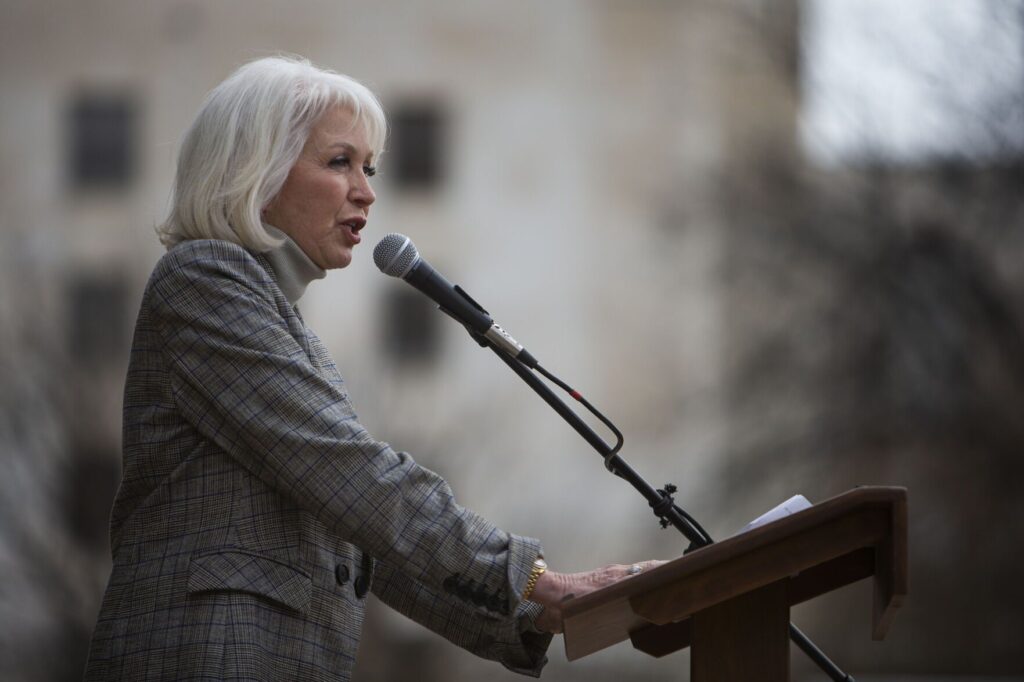
President Donald Trump on Thursday said he is “pardoning” Tina Peters, though that won’t free the former Colorado elections administrator as she was convicted under state laws of a security breach of her office’s voting equipment. Trump’s pardon power does...
Man set for plea deal in Evergreen shooting
Sage Kelley
sage.kelley@denvergazette.com
Updated 2 days ago
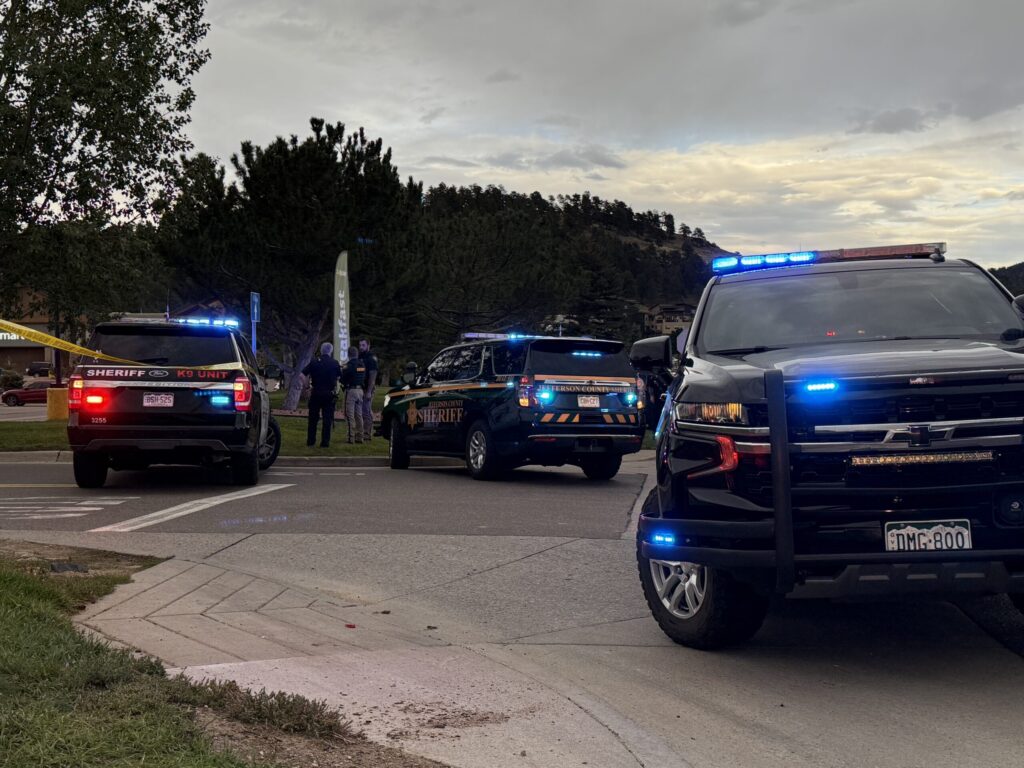
A Lakewood man may be on his way to a plea deal after allegedly ramming police vehicles at the Evergreen Walmart just a day after the Evergreen High School shooting. Tyler Young, 33, waived his right to a preliminary hearing...
Appeals judge believes revised ‘reasonable doubt’ definition is unconstitutional
Michael Karlik
michael.karlik@coloradopolitics.com
Updated 2 days ago
Although Colorado’s second-highest court has issued multiple decisions in recent months upholding a revised definition of “reasonable doubt” from three years ago, an appellate judge became the first on Thursday to argue that a key phrase violates defendants’ constitutional right...
CDOT did not violate constitutional rights of outdoor advertising company, appeals court says
Michael Karlik
michael.karlik@coloradopolitics.com
Updated 3 days ago
Colorado’s second-highest court concluded last month that the Colorado Department of Transportation did not violate the constitutional rights of an outdoor advertising company by denying two permits for billboards in Adams County. StreetMediaGroup, LLC argued CDOT violated its right to...

Family files lawsuit over 2023 Jeffco inmate death
Sage Kelley
sage.kelley@denvergazette.com
Updated 3 days ago
The family of 27-year-old Ashley Jo Raisbeck filed a lawsuit against the Jefferson County Sheriff’s Office nearly two years after the woman died in custody. Jaime Raisbeck, Ashley’s mother, stood outside of the Alfred A. Arraj Courthouse Wednesday morning, a...
Colorado Supreme Court’s opinion output drops by two-thirds amid justice’s absence
Michael Karlik
michael.karlik@coloradopolitics.com
Updated 5 days ago
The Colorado Supreme Court has released significantly fewer new opinions in recent months compared to the previous two years, even as the judicial branch insisted that a member’s open-ended absence is not causing delays. Justice Melissa Hart has been on...

Divided 10th Circuit rules bank customer must arbitrate discrimination-related claims
Michael Karlik
michael.karlik@coloradopolitics.com
Updated 5 days ago
The Denver-based federal appeals court ruled on Monday that a mandatory arbitration clause in the fine print of a customer’s bank account agreement prohibited her from pursuing claims of racial discrimination in court. Jeanetta Vaughn filed suit against JPMorgan Chase...
Colorado’s federal trial court denies admission to lawyer owing tens of thousands in dues, penalties
Michael Karlik
michael.karlik@coloradopolitics.com
Updated 4 days ago
Colorado’s U.S. District Court declined last month to allow an attorney to practice before the court due to his failure to pay enrollment fees and penalties to another state’s bar association for years. The federal trial court requires attorneys to...
PREV
PREVIOUS

Q&A with Joe Fore | Law professor on the importance of how judicial decisions look
Across the vast federal court system are dozens of trial courts, 13 circuit courts of appeals and one Supreme Court. Each court issues countless pages of written work every year. While the contents of judicial decisions may vary greatly, the look and feel of those decisions also lack uniformity. Joe Fore, a professor of legal […]

Homelessness in Colorado: Aurora experiments with 'treatment first'
Editor’s note: This three-part series explores the unique complexities and similarities of the homeless challenge in Denver, Aurora and Colorado Springs. Today’s Part 2 focuses on Aurora. For 12 years, Jodi Froemming owned a house in Aurora, a sprawling municipality and one of Colorado’s fastest-growing cities on the Front Range. “I had the perfect life,” […]