

10th Circuit conference opens in Colorado Springs with visit from Gorsuch, SCOTUS update
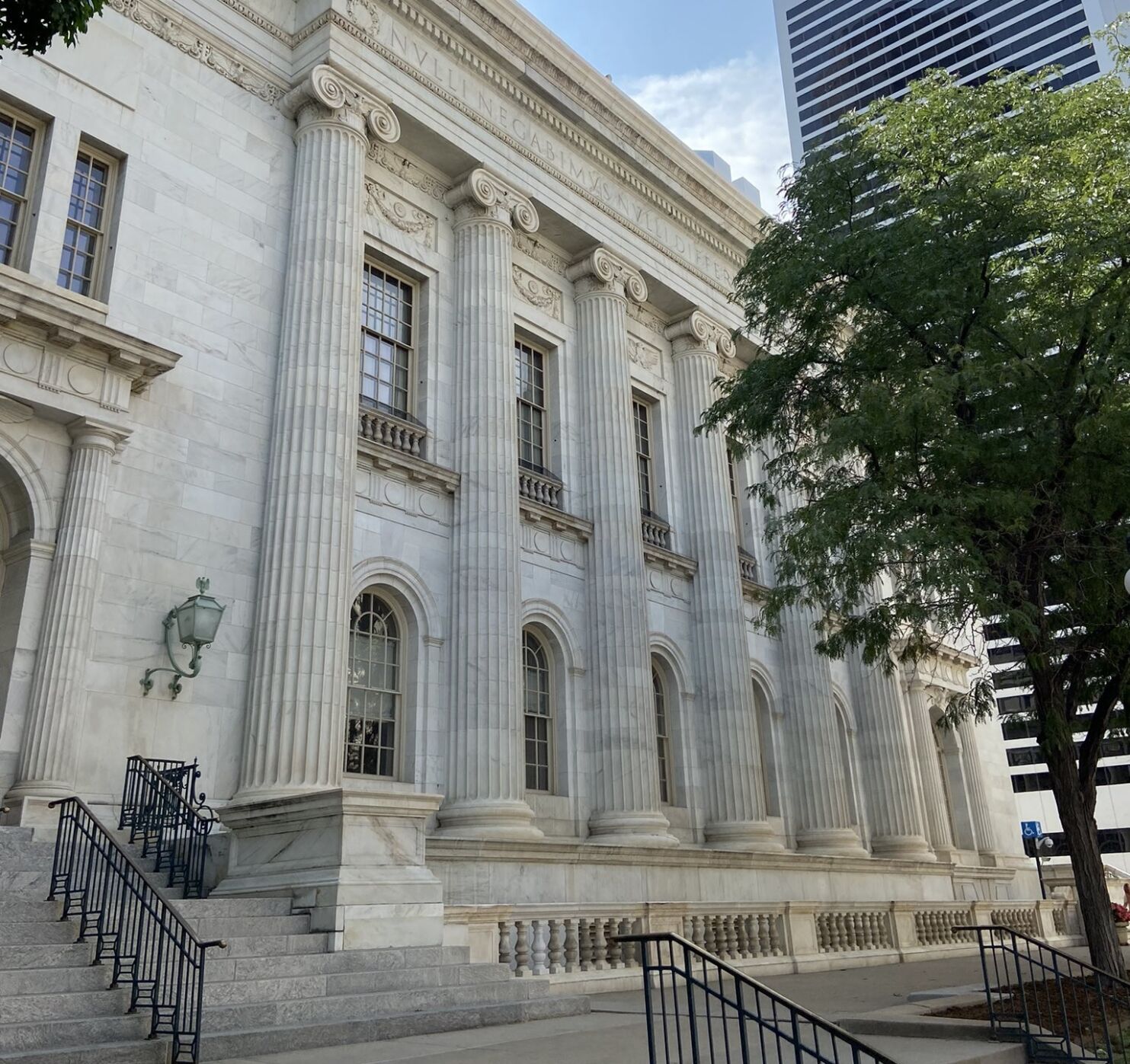
The federal appeals court based in Denver has commenced its first conference since the onset of COVID-19, bringing lawyers and judges from Colorado and five surrounding states to Colorado Springs on Thursday — plus one guest from Washington, D.C.
U.S. Supreme Court Justice Neil M. Gorsuch spoke to attendees at the Bench & Bar Conference for the U.S. Court of Appeals for the 10th Circuit and responded to friendly questions about his personal and professional life. He provided few details about the operations of the nation’s highest court.
“I feel I probably got the best appellate bench training anybody could hope for. You look at the docket we have on the 10th Circuit, how varied it is,” said Gorsuch, who served as a 10th Circuit judge from Colorado prior to his Supreme Court confirmation. “You have a very good read on the whole of federal law in the 10th Circuit in the way that not every circuit does.”
The 10th Circuit hears appeals in federal cases from Colorado, Oklahoma, Utah, Kansas, New Mexico and Utah. The Bench & Bar Conference, which is being held at The Broadmoor resort, is the first biennial gathering the court has held since 2018.
Chief Judge Timothy M. Tymkovich of Colorado formally announced he will be ending his fixed seven-year term as the top appellate judge at the end of the month. Judge Jerome A. Holmes of Oklahoma, who, like Tymkovich, is an appointee of George W. Bush, will become the new chief judge in October.
Tymkovich introduced Gorsuch, a friend of his from their time as appellate judges, as the member of the Supreme Court assigned to consider certain requests from the 10th Circuit.
“We’ve been educating a lot of easterners for the past 20 years or so as our circuit justice,” Tymkovich quipped. “But of course, Justice Gorsuch needs no such education on the West.”

Gorsuch was a 2017 appointee of Donald Trump to fill the seat of the late Justice Antonin Scalia. While Scalia died during the presidency of Barack Obama, the Republican-majority U.S. Senate refused to consider Obama’s nominee during the remainder of his term.
Gorsuch’s comments to the 10th Circuit conference touched briefly on the unprecedented leak of a draft Supreme Court opinion to POLITICO earlier this year in the case of Dobbs v. Jackson Women’s Health Organization, which eliminated the longstanding constitutional protection for abortion.
“I hope we get to the bottom of this, sooner or later,” said Gorsuch, who voted with the court’s majority in Dobbs in an opinion substantially similar to the leaked draft. He added that Chief Justice John G. Roberts Jr. has directed an investigation into who provided the draft document to reporters.
“Improper efforts to influence judicial decision-making, from whatever side, from whomever, are a threat,” Gorsuch said. “The opportunity to hear from your colleagues informally about your initial ideas, your drafts … it’s an invaluable part of your decision-making process. And it improves our final products.”
Conference attendees also heard from a panel of academics about the Supreme Court’s most recent term, and specifically the three decisions of Dobbs, New York State Rifle & Pistol Association, Inc. v. Bruen and West Virginia v. Environmental Protection Agency.
Bruen, in which the court’s majority decided gun safety laws are constitutionally-sound only when they are consistent with a “historical tradition of firearm regulation,” puzzled former 10th Circuit judge and current Stanford Law School professor Michael W. McConnell.
“What is all this history doing? What does it mean?” he said. “You district judges out there (hearing challenges to gun regulations) are very likely to be getting briefs about what was meant by some stray remark … in the 15th century.”
In the EPA decision, the court decided that some questions of economic and political significance — in particular, the regulation of carbon emissions — need to stem from a congressional directive before governmental agencies may act.
“It’s interesting how the political views about agencies have shifted. There was a time where it was liberals who were suspicious of agencies because agencies were subject to ‘corporate capture,'” said former Stanford Law School dean Kathleen M. Sullivan, referring to the ability of private industry to influence government regulators.
“Yet now,” she continued, “we see much more from the conservative side of the political spectrum a skepticism about agencies operating as ‘the deep state.'”
Since the end of the court’s term in June, President Joe Biden’s appointee, Justice Ketanji Brown Jackson, has been sworn in. Gorsuch said Jackson has already set up her office and one of Tymkovich’s former clerks is now a clerk for her.
Although Gorsuch predominantly sides with the other conservative members of the Supreme Court, he occasionally joins the Democratic-appointed justices — notably on matters of tribal sovereignty. He spoke highly of his former liberal colleagues, the late Justice Ruth Bader Ginsburg and recently-retired Justice Stephen G. Breyer, and mentioned his shared passion for civics education with current Justice Sonia Sotomayor.
Gorsuch disclosed his philosophy toward deciding whether to dissent in a case, both as a justice and as an appellate judge.
“You have to really recognize your colleagues have come at this, too,” Gorsuch said. “The majority has spoken, and the dissent is a statement that you really think we’ve made a wrong turn. And you should be duly humbled by all those other considerations before you pick up the pen.”
The 10th Circuit Bench & Bar Conference will continue through Saturday.

Colorado commission makes new access-to-justice recommendations after renewed listening tour
Michael Karlik
michael.karlik@coloradopolitics.com
Updated 1 day ago
Adding judges to handle caseloads. Expanding authority for paraprofessionals in civil cases. Allowing self-represented litigants to file electronically. Making the judiciary’s website user-friendly. Those were among the recommendations advanced by the Colorado Access to Justice Commission in a report released Friday,...
‘Deep source of pride’: Federal judge speaks about first year on bench, how he spends his time
Michael Karlik
michael.karlik@coloradopolitics.com
Updated 1 day ago
One of Colorado’s newest federal judges spoke on Thursday about his first year on the bench, his philosophy behind facilitating case settlements and how his background as a public defender informs his current role. “Most of my career, I represented...
Trump says he has ‘pardoned’ Tina Peters
Wire Services
wire-services@coloradopolitics.com
Updated 3 days ago
President Donald Trump on Thursday said he is “pardoning” Tina Peters, though that won’t free the former Colorado elections administrator as she was convicted under state laws of a security breach of her office’s voting equipment. Trump’s pardon power does...
Man set for plea deal in Evergreen shooting
Sage Kelley
sage.kelley@denvergazette.com
Updated 2 days ago
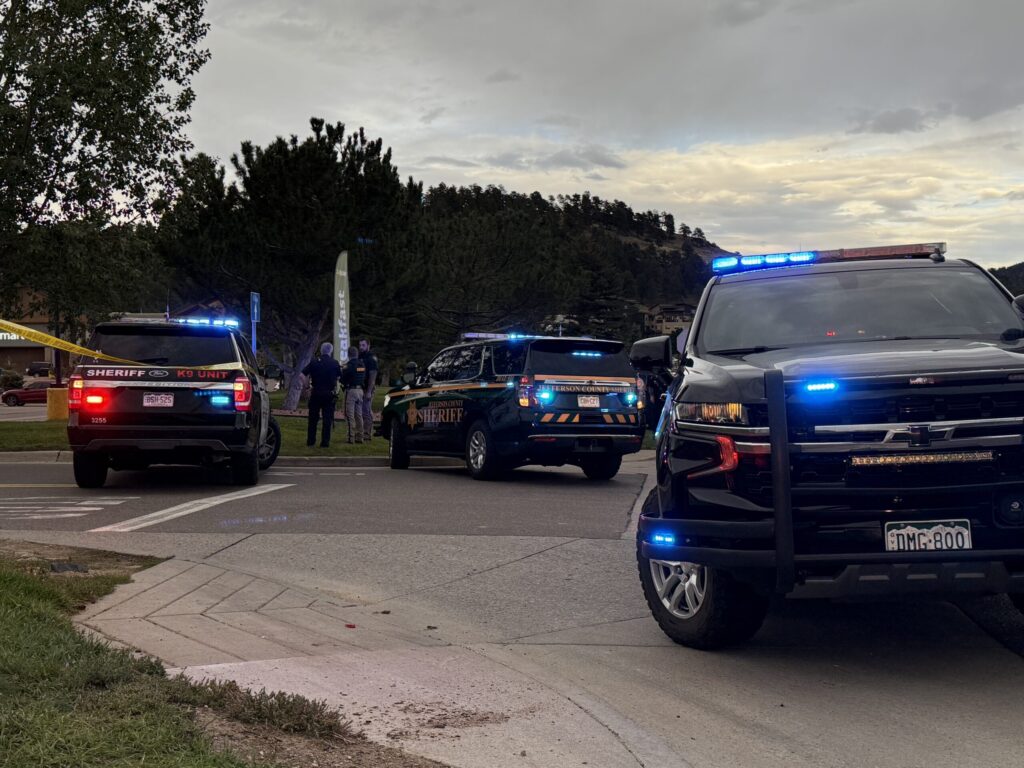
A Lakewood man may be on his way to a plea deal after allegedly ramming police vehicles at the Evergreen Walmart just a day after the Evergreen High School shooting. Tyler Young, 33, waived his right to a preliminary hearing...
Appeals judge believes revised ‘reasonable doubt’ definition is unconstitutional
Michael Karlik
michael.karlik@coloradopolitics.com
Updated 2 days ago
Although Colorado’s second-highest court has issued multiple decisions in recent months upholding a revised definition of “reasonable doubt” from three years ago, an appellate judge became the first on Thursday to argue that a key phrase violates defendants’ constitutional right...
CDOT did not violate constitutional rights of outdoor advertising company, appeals court says
Michael Karlik
michael.karlik@coloradopolitics.com
Updated 3 days ago
Colorado’s second-highest court concluded last month that the Colorado Department of Transportation did not violate the constitutional rights of an outdoor advertising company by denying two permits for billboards in Adams County. StreetMediaGroup, LLC argued CDOT violated its right to...

Family files lawsuit over 2023 Jeffco inmate death
Sage Kelley
sage.kelley@denvergazette.com
Updated 3 days ago
The family of 27-year-old Ashley Jo Raisbeck filed a lawsuit against the Jefferson County Sheriff’s Office nearly two years after the woman died in custody. Jaime Raisbeck, Ashley’s mother, stood outside of the Alfred A. Arraj Courthouse Wednesday morning, a...
Colorado Supreme Court’s opinion output drops by two-thirds amid justice’s absence
Michael Karlik
michael.karlik@coloradopolitics.com
Updated 5 days ago
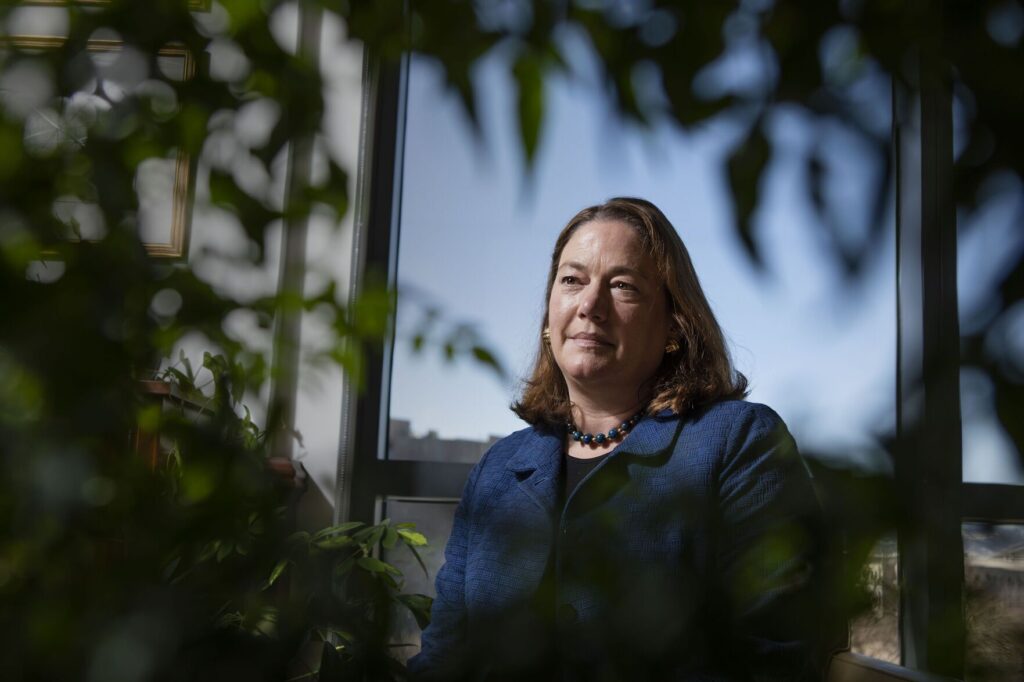
The Colorado Supreme Court has released significantly fewer new opinions in recent months compared to the previous two years, even as the judicial branch insisted that a member’s open-ended absence is not causing delays. Justice Melissa Hart has been on...

Divided 10th Circuit rules bank customer must arbitrate discrimination-related claims
Michael Karlik
michael.karlik@coloradopolitics.com
Updated 5 days ago
The Denver-based federal appeals court ruled on Monday that a mandatory arbitration clause in the fine print of a customer’s bank account agreement prohibited her from pursuing claims of racial discrimination in court. Jeanetta Vaughn filed suit against JPMorgan Chase...
Colorado’s federal trial court denies admission to lawyer owing tens of thousands in dues, penalties
Michael Karlik
michael.karlik@coloradopolitics.com
Updated 4 days ago
Colorado’s U.S. District Court declined last month to allow an attorney to practice before the court due to his failure to pay enrollment fees and penalties to another state’s bar association for years. The federal trial court requires attorneys to...
PREV
PREVIOUS

Judge refuses to toss lawsuit against Pueblo for 'reckless' cop's killing of motorist
A federal judge has refused to dismiss the legal claims against the city of Pueblo for failing to train or discipline an allegedly “reckless” officer who shot two vehicle occupants, killing the driver. U.S. District Court Senior Judge Christine M. Arguello ruled last week that Sarah Naranjo, the injured passenger, and Marie Adorno, the mother […]

Chief Justice Roberts deems it 'mistake' to question Supreme Court's legitimacy based on decisions
Chief Justice John G. Roberts, Jr. on Friday night pushed back sternly against the notion that a series of controversial decisions over the past term has endangered the legitimacy of the U.S. Supreme Court. “The court has always decided controversial cases and decisions have always been subject to intense criticism, and that is entirely appropriate,” […]