

Democrat running in Colorado’s 4th Congressional District urges long-term water planning and support for rural communities
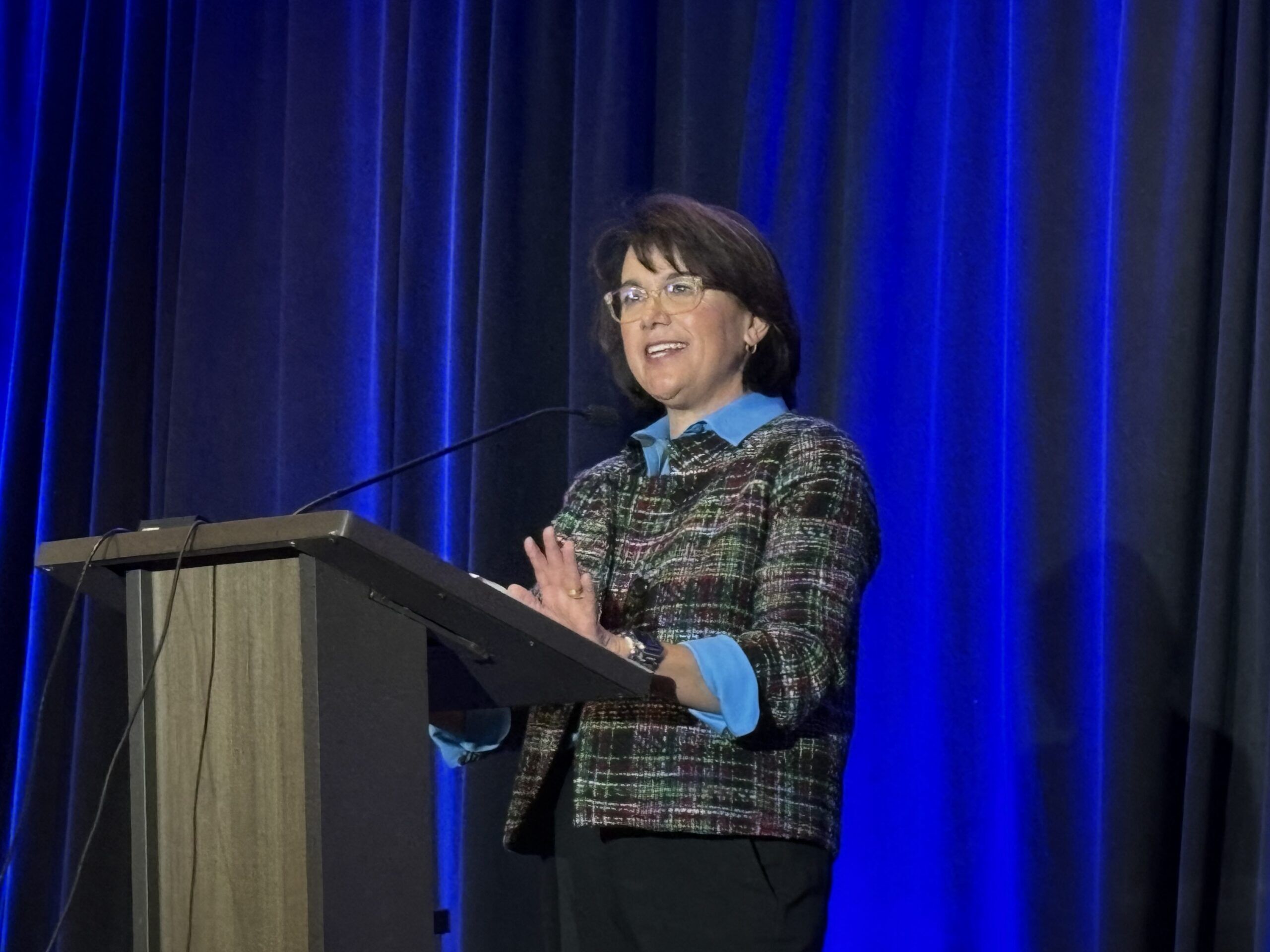
Eileen Laubacher hopes to become the next representative of Colorado’s 4th Congressional District, and on Thursday she made her case on the final day of Colorado Water Congress in Steamboat Springs.
Laubacher, a Democrat, spent 34 years in the U.S. Navy, retiring as a two-star admiral. She is challenging Republican U.S. Rep. Lauren Boebert, who spoke at the annual event earlier in the week.
She admittedly is no water expert, but told the audience, “You don’t have to be the person in the room who knows the most about every issue. You have to know how to bring the right people into the room, how to listen to the experts, ask the right questions and then actually get something done.”
She said she found it encouraging that the people at Water Congress are doing the hard work of finding common ground.
Water should not be a dividing line between rural and urban Colorado, any more than agriculture should be a left or right issue, she said.
She said she recognizes the challenges, such as decreasing snowpack, changing runoff patterns, dry soils, groundwater depletion, aging infrastructure and increasingly severe drought.
One federal program, infrastructure project or one piece of legislation won’t solve all that, she said, adding that most of the work belongs at the state and local level.
But there is a role for the federal government to play, and she said Colorado’s 4th District needs a “much stronger partner in Washington.”
“A real partner in Congress can help fund conservation and efficiency improvements in partnership with our communities here, not in opposition to them,” she said. “A real partner in Congress can protect Colorado’s interests when federal policy intersects with interstate compacts. And it can make sure that rural communities aren’t handed expensive federal mandates without the resources to comply.”
She added, Washington politicians have failed when communities can’t access safe, reliable drinking water or when help is needed for farmers to continue producing food.
“We have a water problem, we have a change in climate, but we also have a leadership problem,” according to Laubacher.
She pledged to work on three goals: keep communities supplied with safe drinking water, build the infrastructure Colorado will need for the next 50 years and keep Colorado’s farms producing.
Laubacher said she’s been to all 21 counties in the district and talked to ranchers, farmers, water providers and local leaders to hear “what Washington gets wrong about rural Colorado.”
That also includes healthcare; she said she’s visited almost all of the 14 rural hospitals in the district, each facing different pressures.
What she said she learned is that what works in one part of the district doesn’t necessarily work in another.
“You can’t understand a district this large and this diverse from Washington,” she said.
Farmers, Laubacher said, are being asked to adapt to a changing water supply, invest in more efficient equipment, change what they grow or farm fewer acres, all while facing higher costs to keep the farms running.
“We need agriculture to be a part of the solution to Colorado’s water challenges, but we cannot ask farmers and ranchers to carry the burden of that solution on their backs,” she said.
One solution is federal investment, she said. That could include modernizing irrigation systems, lining ditches, investing in groundwater recharge and aquifer repair projects, supporting soil health practices and helping producers transition to more drought-resilient practices without having to absorb all the costs themselves.
Laubacher also spoke of the state’s obligation regarding the Republican River compact, and said both the U.S. Department of Agriculture and Bureau of Reclamation can be partners in that work.
The compact, which dates back to the 1940s, governs water allotments from the river to Colorado, Nebraska and Kansas. A 2018 settlement with Kansas requires Colorado farmers to halt production on 25,000 acres of land irrigated by the Republican River by 2030.
She also addressed the cost of compliance with federal drinking water standards, which she said falls more heavily on a town of a few thousand people than on a major metropolitan area.
She said she believes if Washington requires a small community to meet a federal drinking water standard, Washington should help that community pay for the infrastructure necessary to meet it.
Finally, on infrastructure, Laubacher said Colorado should stop addressing water projects one at a time and think strategically about what will be needed in the next 50 years.
She pledged to work with communities and water managers to develop a list of water infrastructure priorities and then aggressively pursue federal authorization and funding.
“I want to bring agriculture, municipalities, conservancy districts, water providers and the state together and ask, ‘what does this base need for the next 50 years and where can the federal government actually help us get this done?,’” she said.
A congressional office should not just wait for communities to come asking for money, according to Laubacher. “It should convene people, identify priorities, help navigate federal agencies, pursue authorizations and appropriations and make sure Colorado isn’t leaving federal resources on the table,” she said.
She said she would work with anyone who is serious about solving the water problems because “we are already behind.”


Castle Rock council declines to censure member accused of misconduct
Nicholas Fogleman
nicholas.fogleman@denvergazette.com
Updated 4 hours ago
A Castle Rock Town Council meeting Tuesday became consumed by allegations that a councilmember attempted to trade a town policy decision for the withdrawal of a recall effort against him. The allegations against Councilmember Mark Davis surfaced during public comment...

Proposal to cap Colorado income tax rate qualifies for November ballot
Thelma Grimes
thelma.grimes@coloradopolitics.com
Updated 4 minutes ago
Election officials on Thursday confirmed that the proposal to cap the state’s income tax at the current rate submitted signatures and voters will consequently decide its fate this November. The fight over tax rates is part of the tug and...

Healthcare Freefall: Telluride mother’s roadside birth underscores shrinking access to OB care in Colorado
Rachael Wright, Special to Colorado Politics
rachael.wright@coloradopolitics.com
Updated 8 hours ago
Editor’s Note: Colorado’s healthcare system is entering a period of accelerating instability — a “tsunami,” as multiple leaders describe it — driven by collapsing hospital finances, shrinking Medicaid reimbursements, disappearing services and a political fight over who is responsible for...

Healthcare Freefall: Longer drives, fewer options for maternity care in Colorado
Thelma Grimes
thelma.grimes@coloradopolitics.com
Updated 8 hours ago
Editor’s Note: Colorado’s healthcare system is entering a period of accelerating instability — a “tsunami,” as multiple leaders describe it — driven by collapsing hospital finances, shrinking Medicaid reimbursements, disappearing services and a political fight over who is responsible for...

Healthcare freefall: Breast cancer survivor shares strain of rural treatment travel
Hap Fry, Special to The Gazette
hap-fry@gazette.com
Updated 9 hours ago
Editor’s Note: Colorado’s healthcare system is entering a period of accelerating instability — a “tsunami,” as multiple leaders describe it — driven by collapsing hospital finances, shrinking Medicaid reimbursements, disappearing services and a political fight over who is responsible for...

Judge grants partial injunction to GEO in fight against state health inspection law
Kyla Pearce
kyla.pearce@gazette.com
Updated 1 day ago
A judge ruled Thursday that The GEO Group does not have to follow parts of a new state law requiring more frequent health and safety inspections at the U.S. Immigration and Customs Enforcement processing center in Aurora. Under the order...

Parker man faces 20 years to life for serial sexual assaults
Nicholas Fogleman
nicholas.fogleman@denvergazette.com
Updated 1 day ago
A 25-year-old Parker man who sexually assaulted three women in 2025 pleaded guilty Wednesday and will serve 20 years to life in prison. Javier Rodriguez-Andrade pleaded guilty to charges stemming from three sexual assaults involving women ages 19 to 24. ...
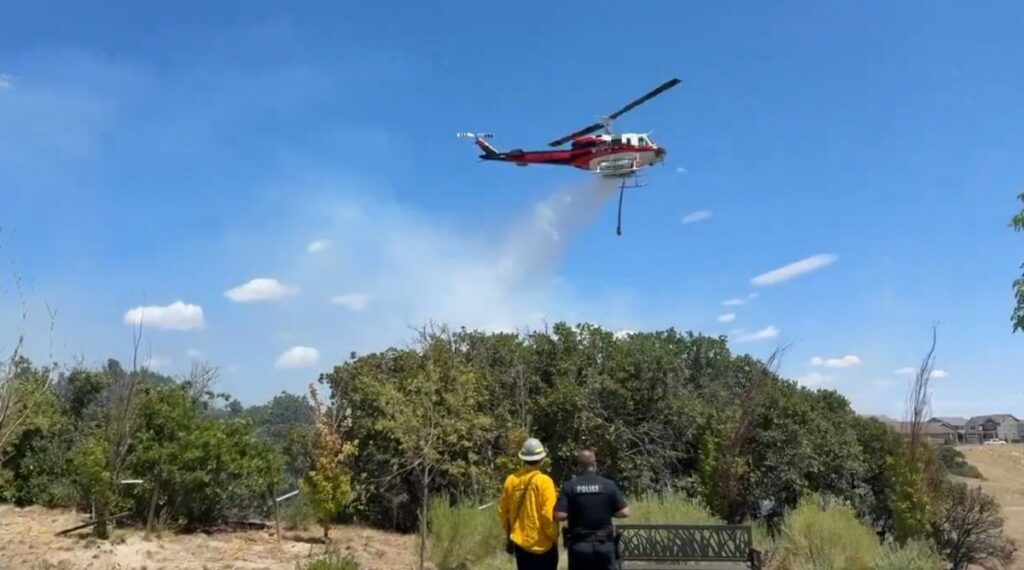
Douglas County moves to Stage 1 fire restrictions following recent rain
Nicholas Fogleman
nicholas.fogleman@denvergazette.com
Updated 1 day ago
Douglas County has downgraded its fire restrictions from Stage 2 to Stage 1 on Thursday following recent rainfall and moderate fire conditions, according to the Douglas County Sheriff’s Office. The change applies to unincorporated Douglas County, as well as the...

Democratic gubernatorial candidate Phil Weiser promises to appoint rural outreach director, water adviser
Marianne Goodland
marianne.goodland@coloradopolitics.com
Updated 8 hours ago
Democratic gubernatorial candidate and current Attorney General Phil Weiser told the Colorado Water Congress Thursday he intends to appoint a rural outreach director and a water policy adviser should he win the election in November. Weiser’s speech at the Steamboat...
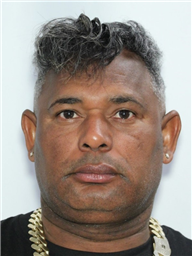
Man charged in Northglenn homicide of wife
Matt Kyle
matt.kyle@denvergazette.com
Updated 1 day ago
A man has been formally charged with murder and burglary relating to a homicide last week in Northglenn. Alexei Munive-Rodriguez, 48, was arrested Sunday after he was at large following the homicide, which occurred Friday. Police were dispatched around 10:30...
PREV
PREVIOUS

Castle Rock council declines to censure member accused of misconduct
A Castle Rock Town Council meeting Tuesday became consumed by allegations that a councilmember attempted to trade a town policy decision for the withdrawal of a recall effort against him. The allegations against Councilmember Mark Davis surfaced during public comment and prompted an unsuccessful effort by some of the council to censure him for what […]

Appeals court cites week-old Colorado law to reinstate child neglect case at child, father’s request
Colorado’s second-highest court invoked a new state law for the first time on Thursday and reinstated a child neglect case that both the child and her father wished to reopen. House Bill 1227 took effect on Aug. 12, reversing a Colorado Supreme Court decision from 2025 that addressed what should happen after a county moves […]