

Safe2Tell tip, corroborated details provided grounds to search backpack, Colorado justices rule
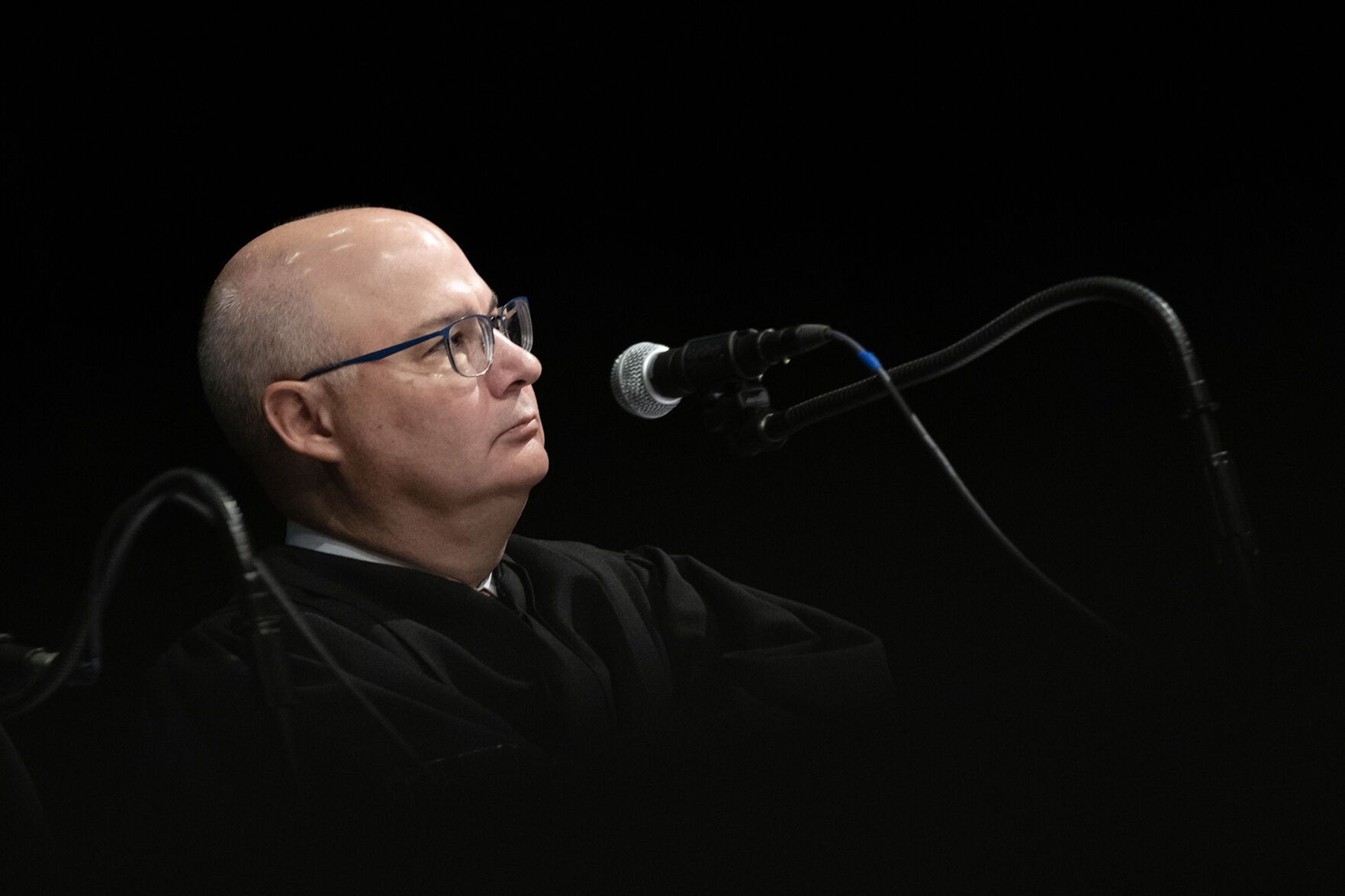
The Colorado Supreme Court decided this month that a tip submitted through the state’s confidential school safety system, plus a Douglas County administrator’s corroboration of some details, provided reasonable suspicion to search a student’s backpack for drugs.
Someone submitted a tip through Safe2Tell, Colorado’s school safety reporting system, alleging a Chaparral High School student was smoking marijuana in biology class. The tip also described the student and indicated he was spraying cologne to mask the smell. Forty-five minutes later, Assistant Principal Craig Bowman received the tip.
Bowman verified whether the student, identified as T.J.W., could have plausibly been in the biology classroom and whether the physical description matched. T.J.W. displayed no signs of drug use when he arrived in Bowman’s office, but a search of the backpack turned up a marijuana vape pen.
Although a trial judge blocked the evidence from being used against T.J.W. because the Safe2Tell tip did not provide reasonable suspicion of a crime, the Supreme Court concluded that the tip, combined with Bowman’s corroboration of certain details, rendered the backpack search constitutional.
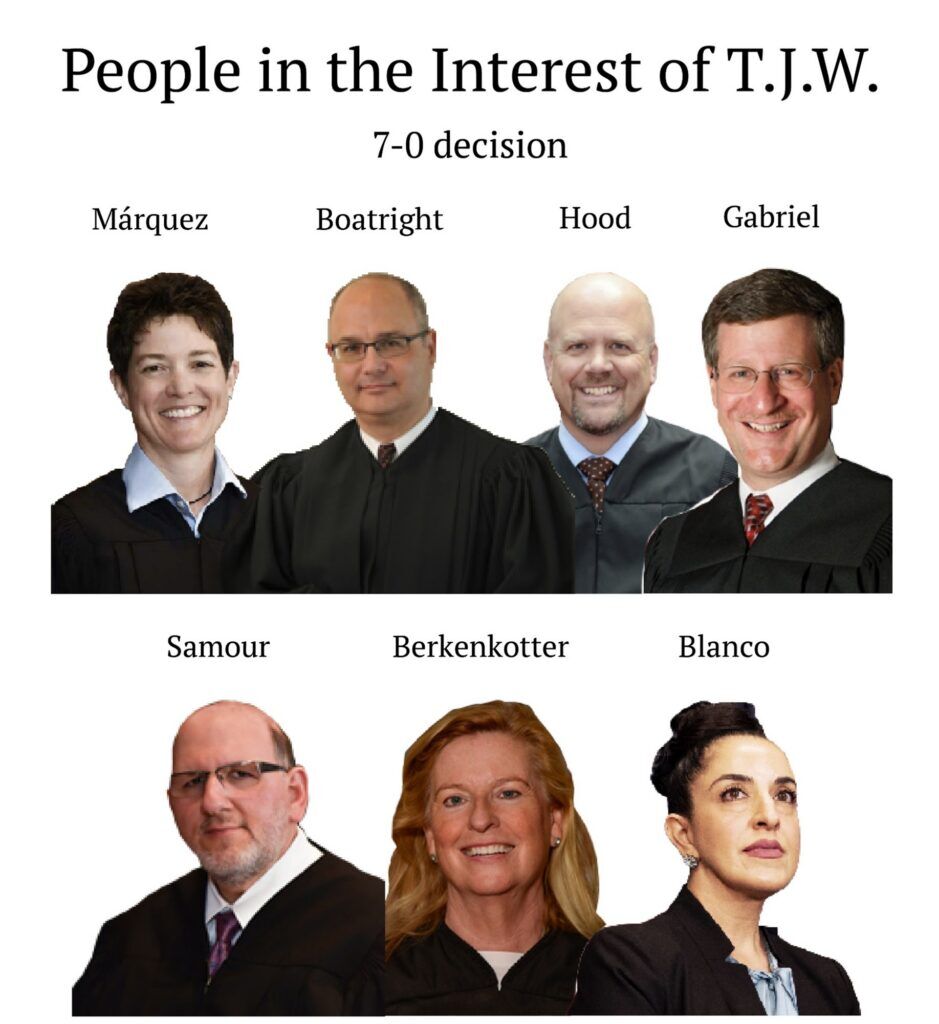
In a June 1 opinion, Justice Brian D. Boatright explained that it did not matter that Bowman had not received independent verification of T.J.W.’s alleged marijuana use by the time of the search.
“It is true that corroboration of criminal activity is one way to enhance the reliability of a tip,” Boatright wrote. “Instead, any kind of corroboration of the information in the tip, whether of criminal conduct or otherwise, can bolster the reliability of an anonymous tip because it allows officers to confirm a tipster’s basis of knowledge and veracity.”
T.J.W.’s case implicated a 1985 U.S. Supreme Court decision, New Jersey v. T.L.O., which addressed the constitutional prohibition on unreasonable searches and seizures in the school context. The court acknowledged that students retain some privacy rights while in school, but the need to maintain order “does not require strict adherence to the requirement that searches be based on probable cause.” Consequently, the court found school officials are typically justified in initiating warrantless searches when there is a reasonable belief of uncovering evidence of a legal or rule violation.
The question for the state Supreme Court was whether the anonymous Safe2Tell tip supplied that belief.
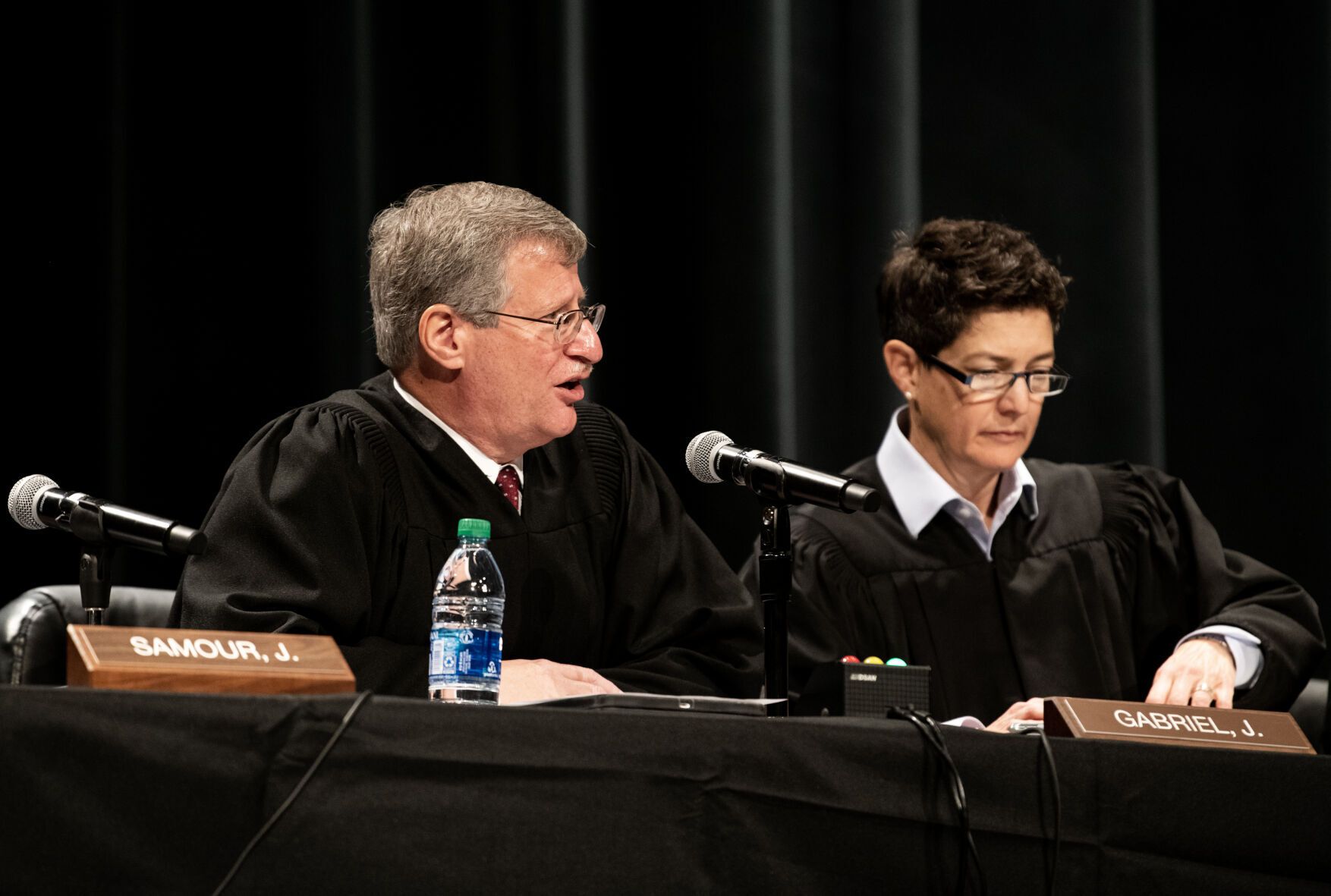
“It seems like there was ample corroboration, at least of the identity of the individual,” Chief Justice Monica M. Márquez told the prosecution during oral arguments. “What we don’t have, and you seem to acknowledge, was corroboration of the actual activity. Is that necessary? And if not, I will express some concern.”
“What we don’t have,” added Justice Richard L. Gabriel, “is somebody who said, ‘I smelled the marijuana in the classroom. I smelled the cologne in the classroom.’ So, we don’t have direct corroboration of the alleged criminal activity.”
Michael S. Juba, representing T.J.W., asked the court to avoid ruling that the anonymity of the Safe2Tell tip contributed to its reliability.
“The anonymity of this program does not give it more reliability. It gives it less reliability,” he said, noting T.J.W.’s alleged conduct occurred “in a classroom full of students and the teacher, (without) any indication that something was going on, this was marijuana being smoked in a classroom.”
In the court’s opinion, Boatright referenced the U.S. Supreme Court’s recognition that law enforcement’s ability to corroborate “significant aspects” of an anonymous tip can create “some degree of reliability” for the uncorroborated allegations of criminal conduct. In T.J.W.’s case, the Safe2Tell tip was fairly recent and several of the details accurately conveyed T.J.W.’s whereabouts and description.
“Bowman’s corroboration of these details before the search established that the tipster had some basis of knowledge and partially confirmed the tipster’s veracity,” wrote Boatright. “Thus, we hold that the search of T.J.W.’s backpack was ‘justified at its inception’ because the anonymous Safe2Tell tip, combined with Bowman’s independent corroboration, supported a finding of reasonable suspicion.”
District Attorney George Brauchler, who is also a Colorado Politics opinion contributor, said the Safe2Tell program is successful in addressing school safety risks, and “I appreciate our Supreme Court unanimously lending greater clarity to the standards law enforcement will use moving forward with these tips.”
The attorney for T.J.W. declined to comment.
The case is People in the Interest of T.J.W.

Trump’s 10th Circuit nominee recuses from cases against federal government without explanation
Michael Karlik
michael.karlik@coloradopolitics.com
Updated 12 hours ago
President Donald Trump’s nominee to fill a vacancy on the Denver-based federal appeals court recused himself without a clear explanation from nine cases against the executive branch while he was undergoing vetting by the White House this spring. U.S. District...
Adams County murder conviction reversed due to faulty jury instruction
Michael Karlik
michael.karlik@coloradopolitics.com
Updated 16 hours ago
Colorado’s second-highest court overturned an Adams County defendant’s murder conviction last month because the instruction provided to the jury about a trespasser’s right to use self-defense did not accurately reflect Colorado law. A person is justified in using force to...
Colorado court upholds murder conviction despite jury disobeying instructions
Michael Karlik
michael.karlik@coloradopolitics.com
Updated 1 day ago
Colorado’s second-highest court upheld an Arapahoe County defendant’s murder conviction last month, even though jurors found he was not the one who shot the victim and the evidence suggested he was not present for the shooting. A three-judge Court of...
Divided appeals court reverses conviction after judge declined to define ‘bludgeon’
Michael Karlik
michael.karlik@coloradopolitics.com
Updated 2 days ago
Colorado’s second-highest court reversed a Jefferson County defendant’s felony menacing conviction on Thursday, concluding that the trial judge’s failure to define “bludgeon” for jurors may have affected the outcome. A three-judge Court of Appeals panel divided in unusual ways in...
10th Circuit dismisses Tina Peters’ challenge to confinement as moot
Michael Karlik
michael.karlik@coloradopolitics.com
Updated 1 day ago
The Denver-based federal appeals court granted the state’s unopposed request on Wednesday to dismiss former Mesa County clerk Tina Peters’ challenge to her confinement as moot. Although Peters received a commutation of her prison sentence last month from Gov. Jared...
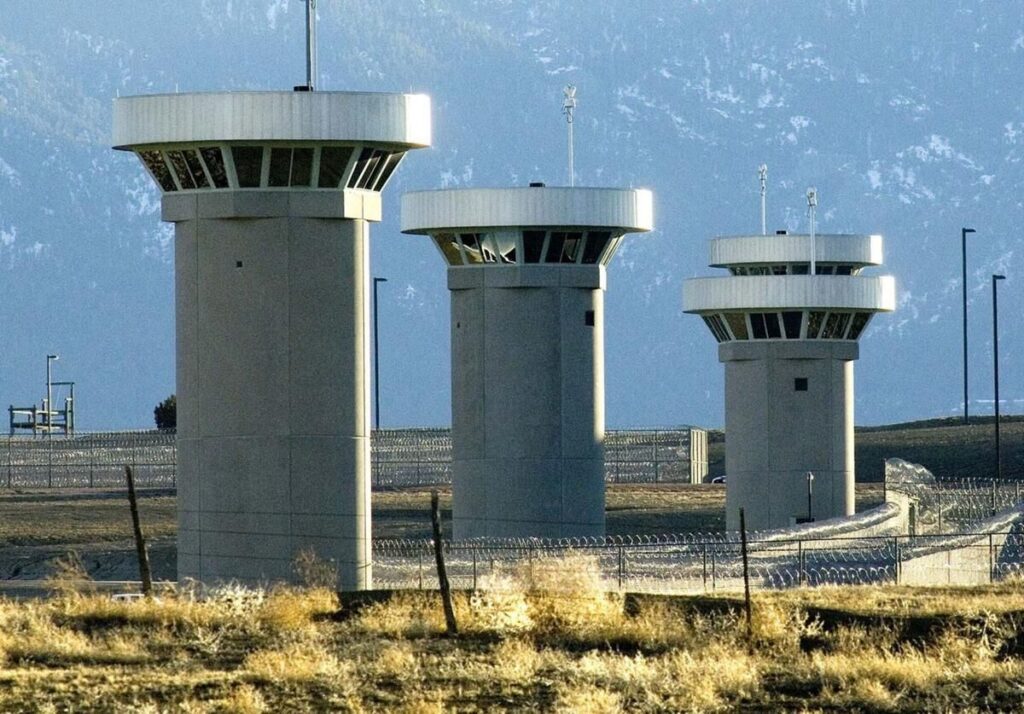
Federal judge declines to recuse from death penalty case after Supermax visit
Michael Karlik
michael.karlik@coloradopolitics.com
Updated 1 day ago
A federal judge declined to recuse herself last month from a death penalty case arising out of Colorado’s “Supermax” prison, finding that her tour of the facility earlier this year did not bias her decision-making. U.S. District Court Judge Charlotte...
Appeals court clarifies offense of impersonating a peace officer
Michael Karlik
michael.karlik@coloradopolitics.com
Updated 3 days ago
Colorado’s second-highest court clarified this month that a person commits the offense of impersonating a peace officer if they engage in “any conduct” while pretending to be law enforcement. In a case out of El Paso County, Richard James Coulier...
Colorado Supreme Court reverses 2 Chaffee County judges for imposing fee on habeas petitioner
Michael Karlik
michael.karlik@coloradopolitics.com
Updated 3 days ago
The Colorado Supreme Court rejected two separate appeals earlier this month from an incarcerated defendant seeking immediate release from prison, but concluded that two Chaffee County judges incorrectly required him to prepay filing fees for his cases. David J. Gottorff...
Weld County judge wrongly denied bail to murder defendant in gap between law change
Michael Karlik
michael.karlik@coloradopolitics.com
Updated 3 days ago
Colorado’s second-highest court ruled this month that a Weld County judge was wrong to deny bail to a murder defendant in the window between the state Supreme Court’s recognition of the right to bail and the voters’ subsequent overruling of...
Defendants acquitted by insanity are eligible for records-sealing, appeals court says
Michael Karlik
michael.karlik@coloradopolitics.com
Updated 2 days ago
Colorado’s second-highest court clarified last month that defendants who are found not guilty by reason of insanity are eligible to have their criminal records sealed from public view. Judges must seal criminal records if, among other things, a defendant is...
PREV
PREVIOUS

Aurora considers landlord license program to help protect renters
The Aurora City Council is considering creating a landlord rental registration and licensing program to protect renter rights. Supporters of a landlord license program say renters in Aurora don’t have adequate protections or an avenue to take recourse against landlords. Those in opposition say such a license is unnecessary, repeals property rights and could raise […]

As number of unaffiliated voters grow in Colorado, experts note patterns, behavior
For the first time in Colorado’s history, more primary ballots are going to voters without a party affiliation than to registered Democrats or Republicans. As such, political experts said, candidates today need to appeal to a new block of people — unaffiliated voters are not monolithic in their political views — who have begun to […]